01
New installation
For apartment, commercial, healthcare or public-building projects that need site review, equipment planning, installation and handover.
Installation details →
Whether the job is a new lift, planned maintenance or an existing elevator fault, start with the building use, floors or stops, shaft or equipment condition, and the exact Mymensingh site.
Looking for an elevator company in Mymensingh? Share whether the requirement is for a new installation, maintenance, repair or modernization. The building type, exact location, shaft status and current lift condition help determine what should happen before a quotation or technical visit.
Mymensingh City Corporation operates across 33 wards. For lift work, the useful detail is the building itself: location, access, number of floors, use and whether the elevator is new, working, unreliable or out of service.
A floor count by itself is not enough for a new lift. The shaft, pit, overhead, door openings, power and equipment access must suit the selected system.
For an existing elevator, the starting point is different. Door problems, uneven stopping, unusual noise, control faults and repeated shutdowns should be diagnosed before replacement parts are selected.
A hospital or clinic may need bed and stretcher movement considered from the beginning. See hospital and bed lift solutions rather than treating it as a standard passenger-lift requirement.

This page covers broad Mymensingh service intent. Detailed technical guidance remains on the dedicated installation, maintenance, repair and modernization pages.
For apartment, commercial, healthcare or public-building projects that need site review, equipment planning, installation and handover.
Installation details →For working lifts that need planned inspection, adjustment, cleaning and condition-based service.
Maintenance details →For door faults, levelling problems, unusual noise, control issues or repeated shutdowns that need diagnosis before parts replacement.
Repair details →For older elevators where recurring faults, obsolete components or difficult parts make repeated short-term repair less useful.
Modernization options →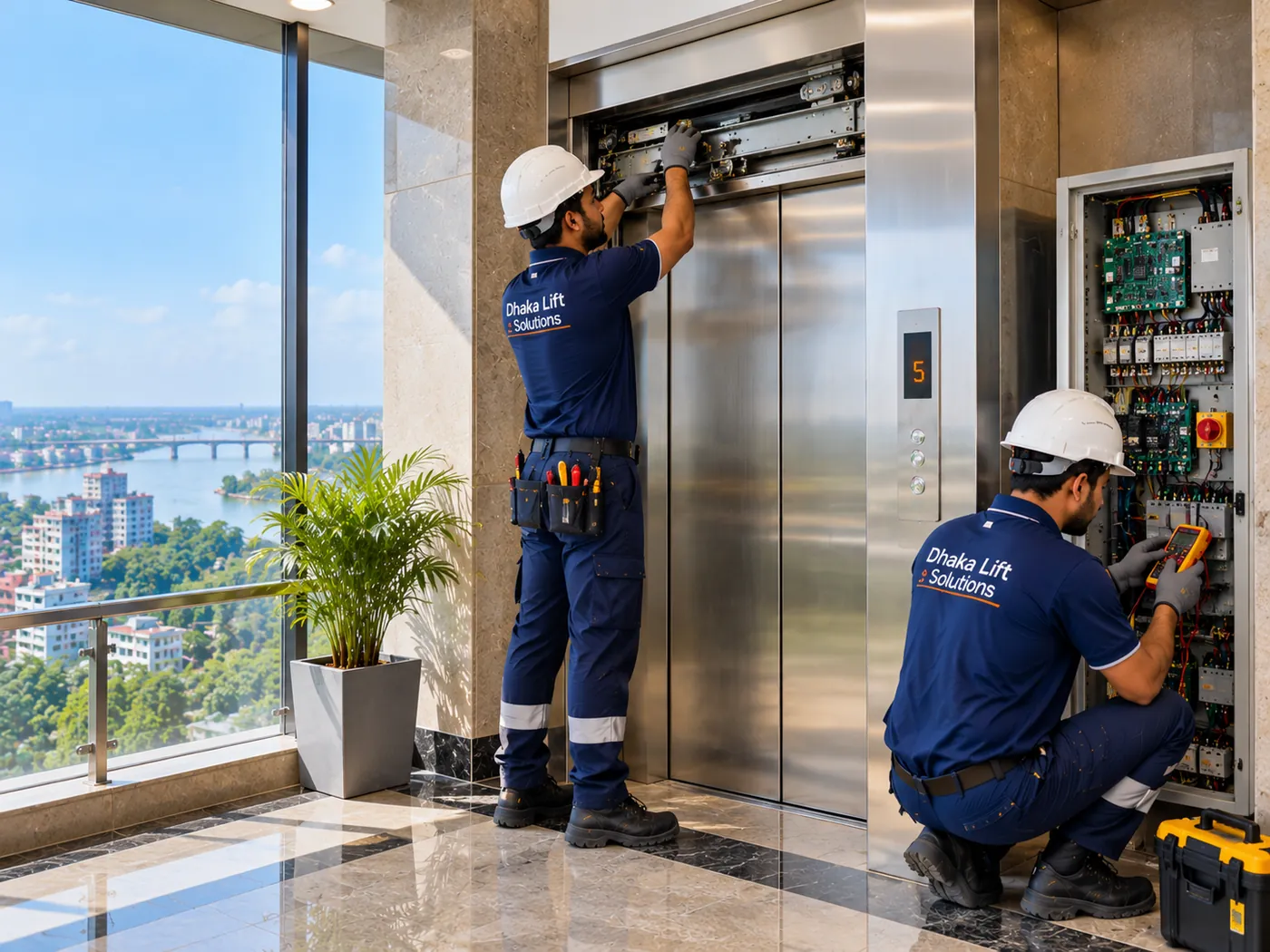
An elevator problem can come from door equipment, sensors, controls, the drive, electrical connections or another mechanical area. A useful repair starts by tracing the symptom to the relevant system.
Final components and settings must match the actual lift. Controller, drive and model information should be checked before replacement is approved.
Hospitals, larger public buildings and busy commercial properties can have several lifts serving different users. Maintenance planning needs to consider how those lifts work together, not just one unit at a time.
Clear service records are especially useful when one building has multiple controllers, different lift ages or recurring faults.
New installation and major technical work should be followed by testing and adjustment appropriate to the selected controller, drive, doors and project scope.
Final checks are system-specific. Generic figures should not replace the selected equipment requirements or measured site condition.

A useful quotation starts with the actual building and lift requirement. The same price, capacity or repair scope does not fit every project.
| New project | Building type, floors or stops, shaft dimensions if available, expected users, project stage and exact Mymensingh location. |
|---|---|
| Maintenance | Lift type, age if known, usage pattern, recent service history and recurring issues. |
| Repair | Fault symptoms, when the issue started, whether the lift still operates and safe photos of visible indications if available. |
| Multi-lift building | Number of lifts, which unit has the problem, model or controller details if known, and whether the other lifts are operating. |
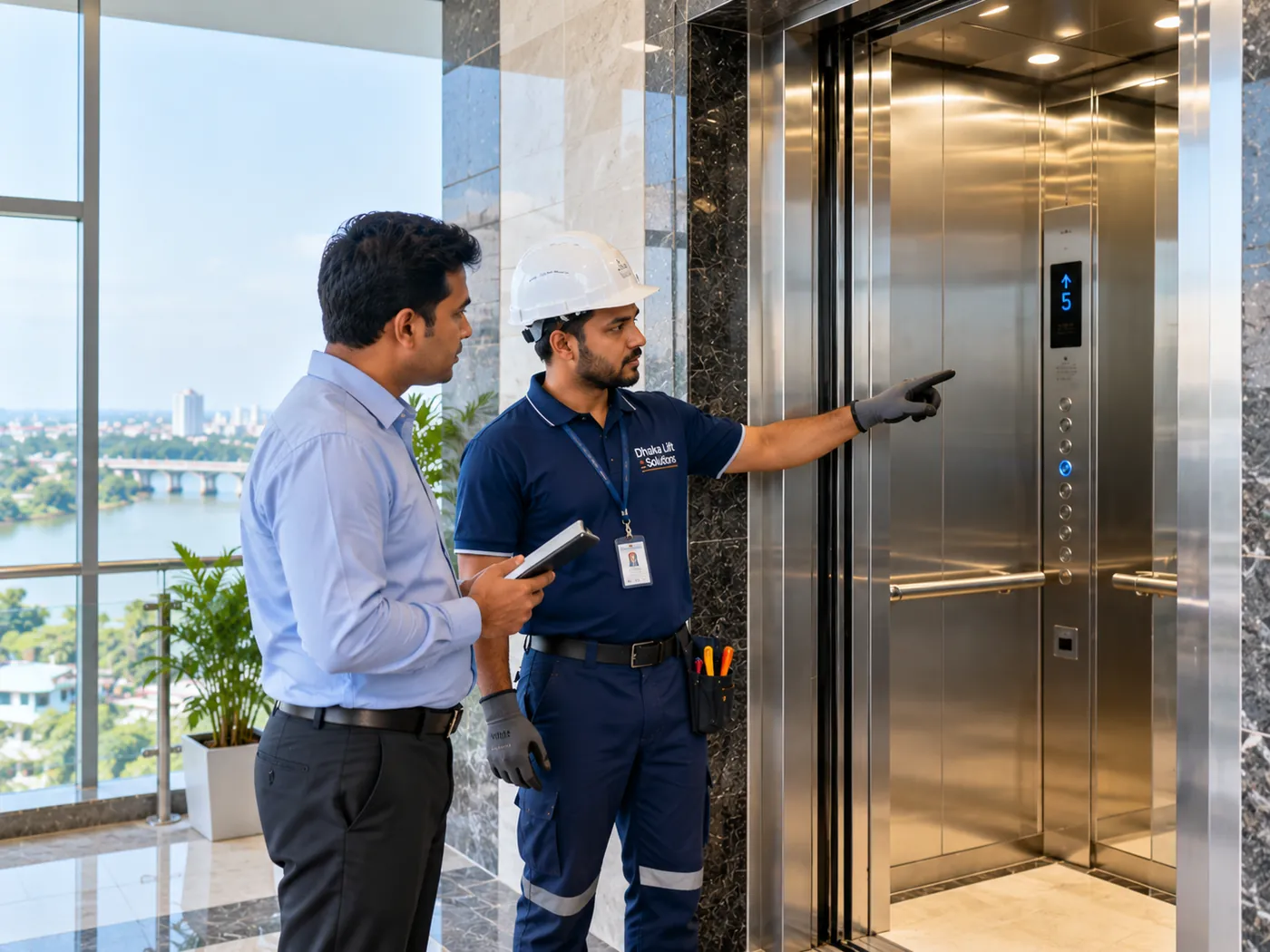
Keep a simple history of routine maintenance, recurring faults, parts replaced and major adjustments. That gives the next technician a better starting point.
It also helps when the same issue returns or when an older lift needs a repair-versus-modernization decision.
Direct answers for building owners, facility teams and project buyers.
Yes. Share the building use, floors or stops, shaft information if available, expected passenger or bed movement, project stage and exact site. Final equipment and dimensions should be confirmed after technical review.
Yes. Identify each lift separately and share the model, age or controller information if known, along with current faults and service history. Multi-lift buildings benefit from clear unit-by-unit records.
Describe the fault, when it started, whether the lift still runs and any visible error indication that can be observed safely. Do not enter the shaft or open electrical equipment simply to collect information.
Sometimes. Controller, drive, doors, parts availability, recurring faults and overall condition should be reviewed before deciding between repair, partial modernization or replacement.
Share the building type, floors or stops, exact location, shaft or existing lift condition, and whether you need installation, maintenance, repair or modernization.