
Hotel Lift Bangladesh for Guests, Luggage & Service Flow
A hotel lift should fit the guest journey as well as daily hotel operations. Plan passenger traffic, luggage, housekeeping movement, floors, shaft conditions and maintenance before final equipment selection.
Hotels normally need elevator planning that considers both guest movement and hotel operations. The suitable number, capacity, cabin, door arrangement, speed and service strategy depend on the building, room count, floors, traffic pattern and selected elevator system.
A hotel elevator starts working before the guest reaches the room
Elevator planning affects arrival, luggage handling, access to guest floors and movement to restaurants, meeting spaces or other hotel facilities. The lift should therefore be considered as part of the hospitality circulation plan, not as an isolated machine.
Arrival
Guests may approach the lift with luggage, children or travel companions during busy check-in periods.
Lobby
Lift location, waiting area and entrance arrangement should work naturally with reception and lobby circulation.
Guest floors
Door operation, leveling and usable cabin space affect everyday access between guestrooms and public areas.
Departure
Checkout periods can concentrate people and luggage into a short time, so peak traffic matters during planning.
Guest circulation and hotel service do not always have the same job
A hotel may need different elevator roles depending on its scale and operation. The final arrangement should follow project requirements and traffic analysis rather than a fixed rule copied from another hotel.
Guest passenger movement
Passenger lifts are part of the visible guest experience. They need to suit normal hotel traffic and the building's architectural layout.
- Guests and visitors
- Personal luggage
- Guestroom-floor access
- Restaurants and event spaces
- Accessibility requirements
For the broader product category, see passenger lift options.
Back-of-house movement
Housekeeping, linen, room-service items and operational supplies can create a different traffic pattern from guest movement.
- Housekeeping carts
- Linen and cleaning supplies
- Operational materials
- Food-service movement where applicable
- Staff movement between service areas
Projects with dedicated hospitality support requirements can also review the service lift page.
What should be decided before choosing the lift?
A hotel elevator should be selected from project information rather than a single generic specification.
Final capacity, speed, cabin dimensions, shaft requirements and equipment configuration depend on the chosen system and building conditions.
Consider guestroom count, occupied floors, public facilities and expected traffic rather than floors alone.
Check periods such as morning departure, evening arrival, events or conferences that may increase elevator demand.
Allow for guests with suitcases and other normal hotel movement, not only standing passenger numbers.
Confirm guest floors, lobby, parking, restaurants, banquet areas and other levels that genuinely require elevator access.
Decide how housekeeping carts, linen and operational items will move without making guest circulation unnecessarily difficult.
Shaft dimensions, pit, overhead, structural conditions and electrical supply must be checked for the actual site.
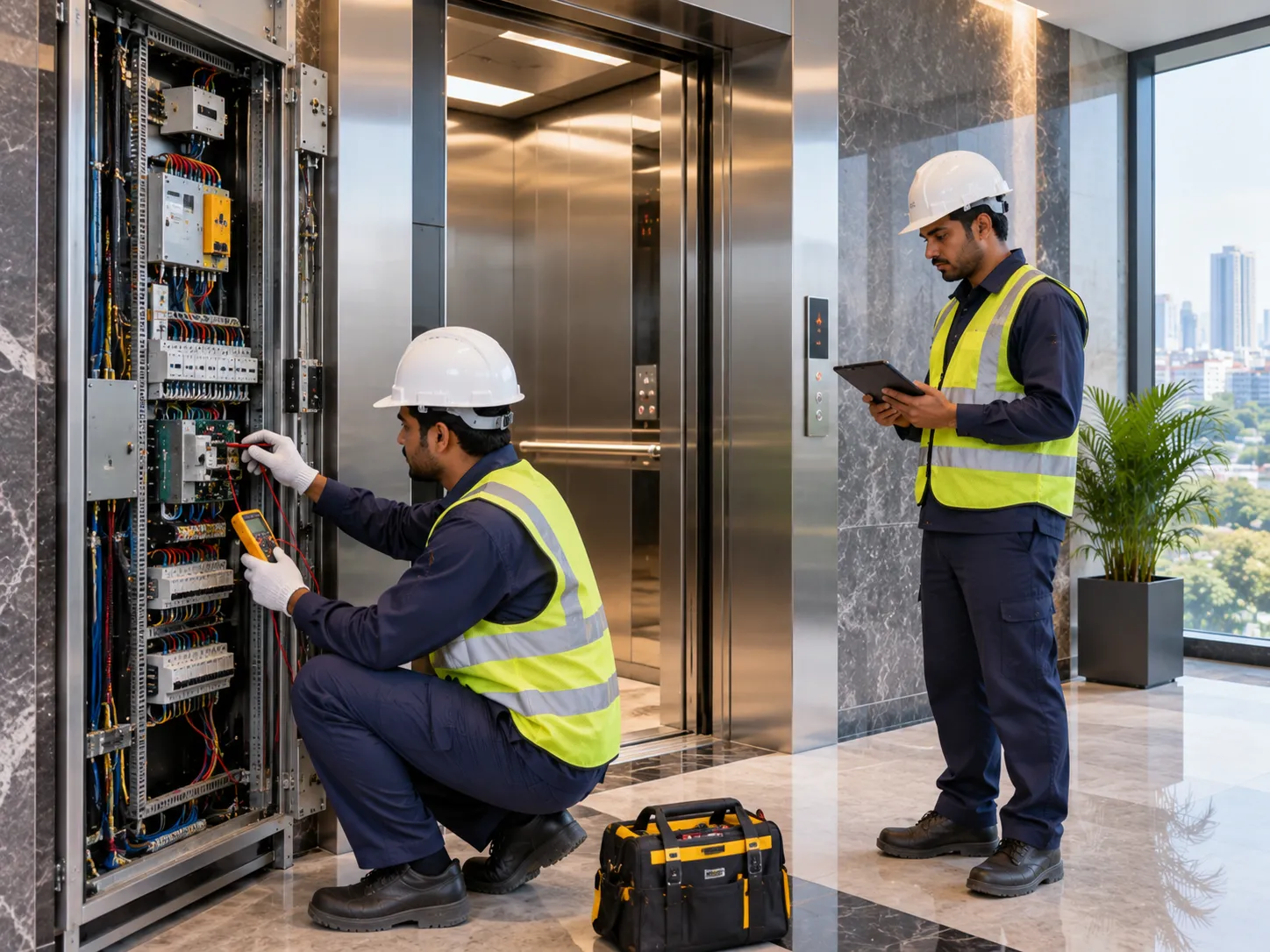
Coordinate the elevator with the hotel before finishes are complete
New hotel projects benefit from early coordination between the lift, architecture, structure, electrical work and internal circulation. Existing hotels need accurate site measurements before a replacement or new lift is selected.
- Clear shaft dimensions
- Pit and overhead conditions
- Number of stops
- Landing-door positions
- Electrical supply
- Guest and service circulation
- Relevant building and fire requirements
Hotel lift maintenance affects both operations and guest experience
An elevator can be a daily part of check-in, housekeeping, guestroom access and event circulation. Preventive maintenance therefore needs to follow the actual elevator system and manufacturer requirements.
For dedicated servicing information, see lift maintenance in Bangladesh.
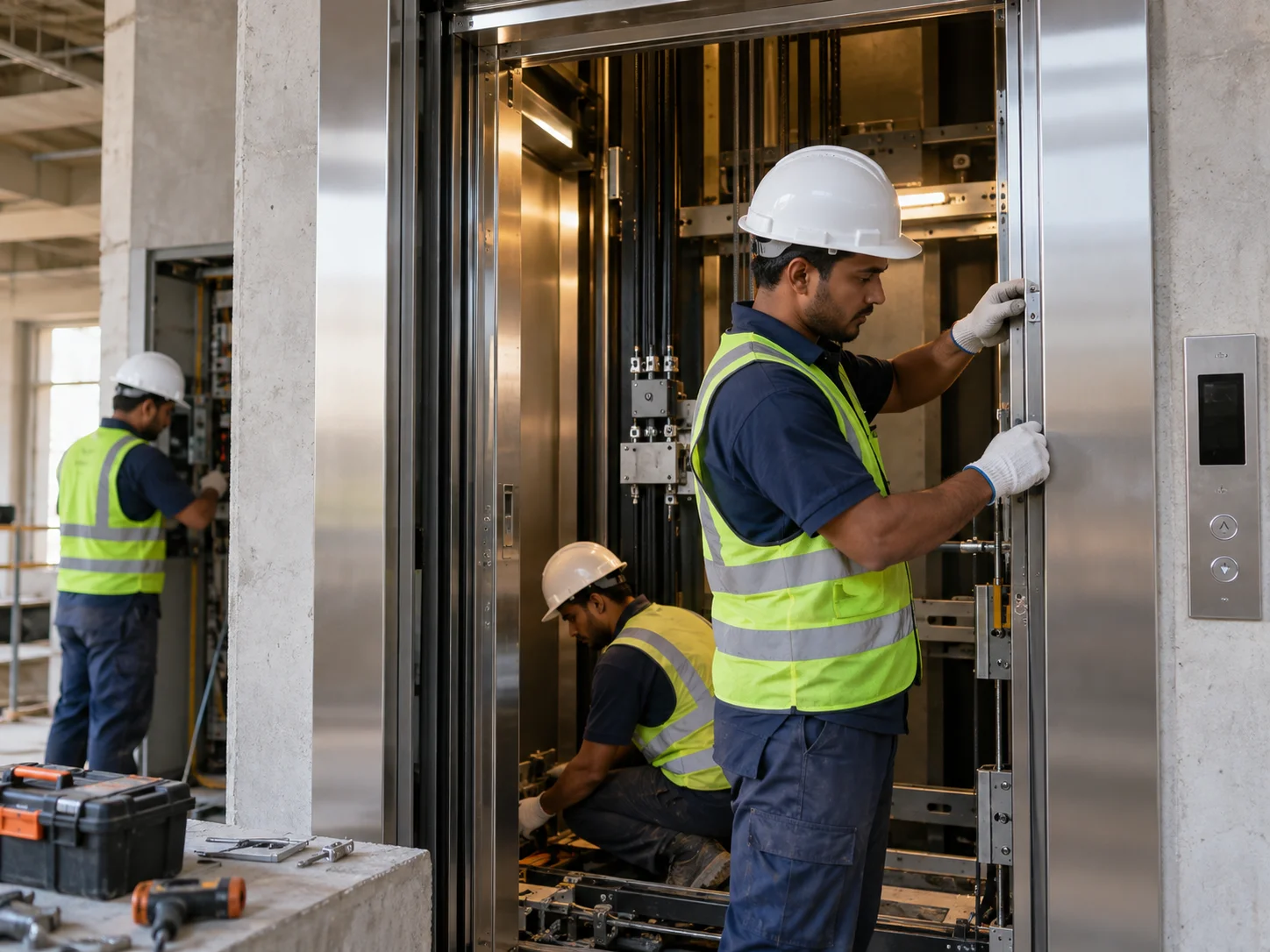
Repeated lift faults should be diagnosed, not worked around
Door problems, irregular leveling, unusual noise, control errors or repeated stoppages need proper technical assessment. The cause should be identified before parts are changed.
For an existing hotel elevator, useful service information includes the fault symptoms, lift model or controller details where available, and clear photographs of the affected equipment.
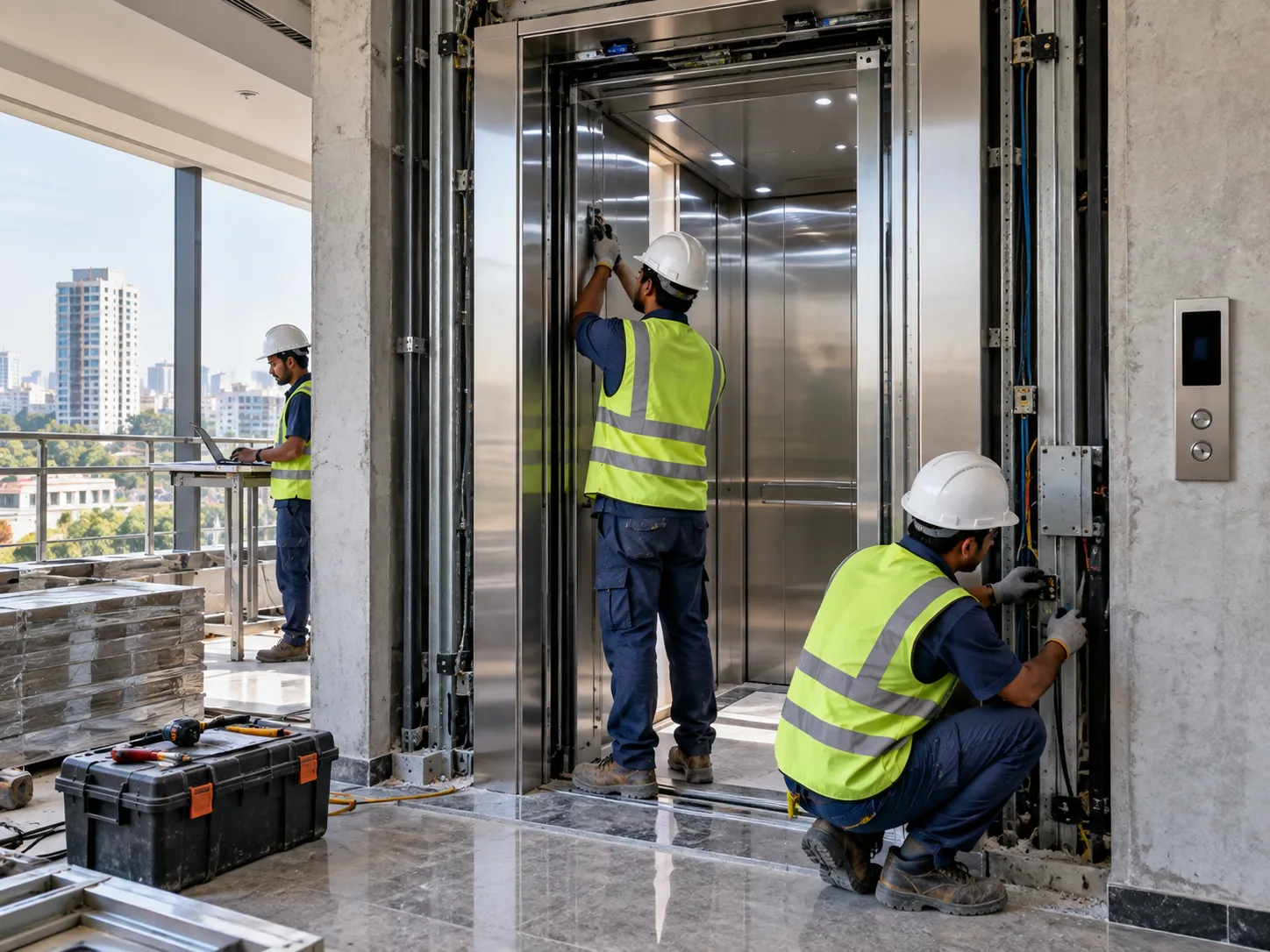
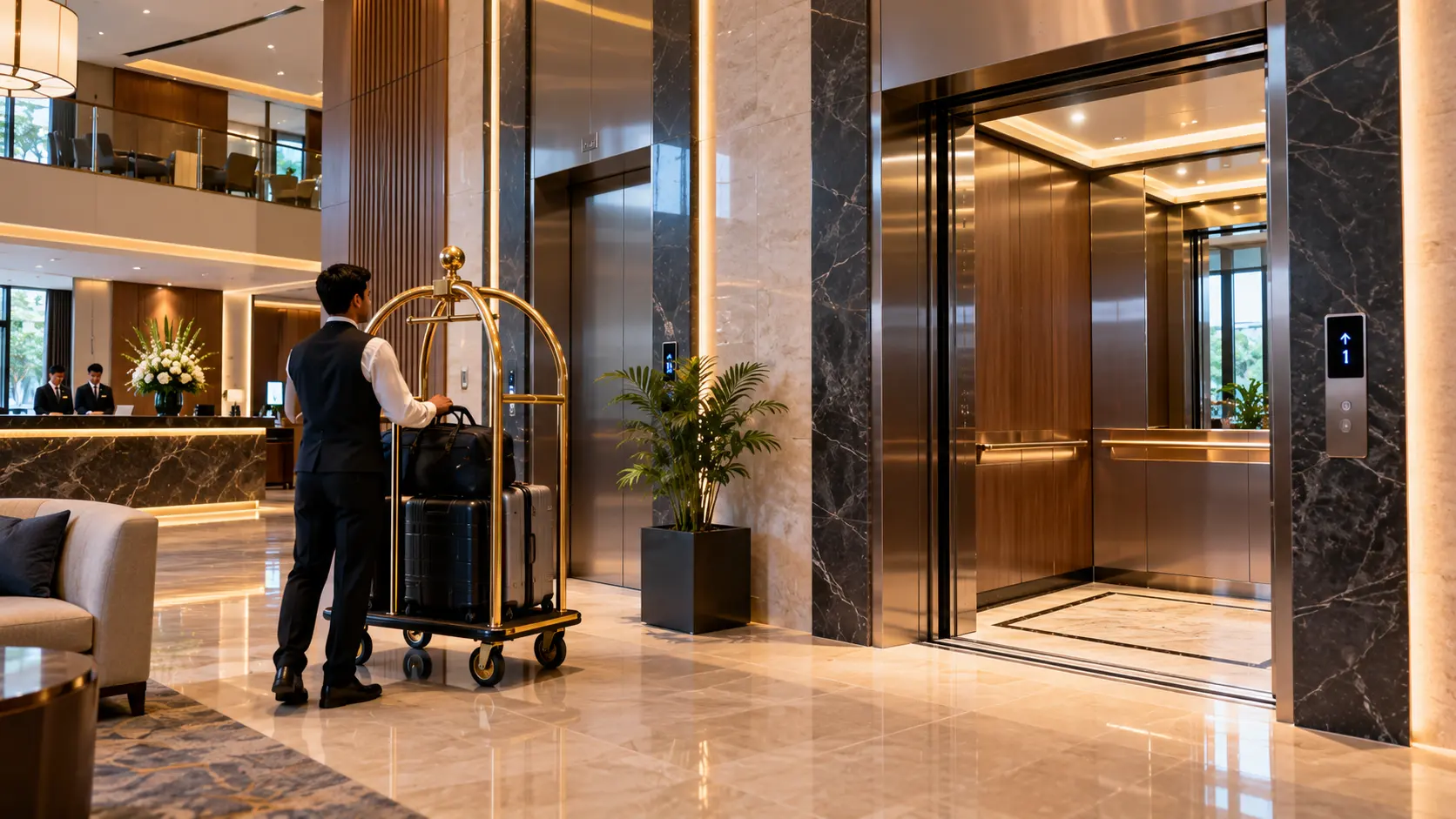
The elevator entrance is part of the hotel interior
In a guest-facing area, the lift entrance sits beside reception, corridors, restaurants or lounges. Door finish, landing treatment and cabin appearance can therefore matter to the interior design.
Finish decisions should be made after the basic technical requirements are settled. Appearance should not replace practical planning for capacity, doors, shaft conditions and maintenance.
What information is useful before requesting a quotation?
Early project information helps narrow the technical discussion without guessing at a universal hotel-lift specification.
Request a Hotel Lift QuotationHotel lift FAQs
What type of lift is suitable for a hotel?
It depends on the hotel layout and operation. Guest areas normally require passenger movement, while some projects also need dedicated service movement for housekeeping, linen or hotel operations. The final arrangement should be based on the building and traffic requirements.
How many lifts does a hotel need?
There is no universal number for every hotel. Room count, floors, expected occupancy, peak traffic, restaurants, event spaces, parking and service operations can all affect the requirement. Larger or more complex projects may benefit from a formal traffic analysis.
What capacity hotel lift should I choose?
Capacity should be selected from expected passenger traffic, luggage movement, cabin use and the wider project design. Final capacity and dimensions depend on the selected lift system and available shaft.
Should a hotel have a separate service lift?
Some hotels benefit from separating guest traffic from housekeeping and back-of-house movement. The need for a separate service elevator depends on hotel size, layout, operations and project requirements rather than one rule that applies to every building.
What affects hotel lift price in Bangladesh?
Cost can vary with capacity, number of stops, travel, speed, cabin finish, door arrangement, drive and control system, shaft condition, installation scope, civil or electrical work, imported equipment and maintenance requirements. A project quotation is more useful than a generic fixed price.
Can a hotel lift be installed in an existing building?
It may be possible, but the available shaft, structural conditions, pit, overhead, electrical supply, landing arrangement and hotel circulation need assessment before final equipment is selected.
What should be sent for a hotel lift quotation?
Share the hotel location, building status, number of floors and stops, guestroom count, passenger or service requirements, shaft dimensions if available, and architectural drawings or site photos.
Planning a hotel lift project in Bangladesh?
Share the hotel size, floors, stops, guest and service requirements, shaft information and project drawings. Those details provide a useful starting point for technical discussion.