
Move linen carts, room-service trolleys, cleaning supplies and stock between floors without sending every trip through the guest lobby. We can review the load, route and space available at your building before a lift is selected.
A service lift is an elevator used for the day-to-day work of a building. In a hotel, it may carry housekeeping staff, linen carts, room supplies and other service loads between floors.
Its layout is shaped by the work: wide enough doors for a loaded trolley, a car that fits the load, and landings where staff can turn and unload without blocking a corridor.
Some service elevators are built to carry staff with the goods. Others are goods-only systems. The approved use of the chosen model must be clear in the specification. Staff must never ride in a goods-only lift.
Think of a cleaner pushing a full linen cart at the start of a shift. Can it get from the laundry to the lift? Will it turn at the landing? Can another worker pass while the cart waits?
In busy hotels, kitchens, laundries and stores may need the same service lift at the same time. Check that traffic before setting the stops and door layout.
A door that looks wide on a drawing may still be tight for a trolley with side handles.
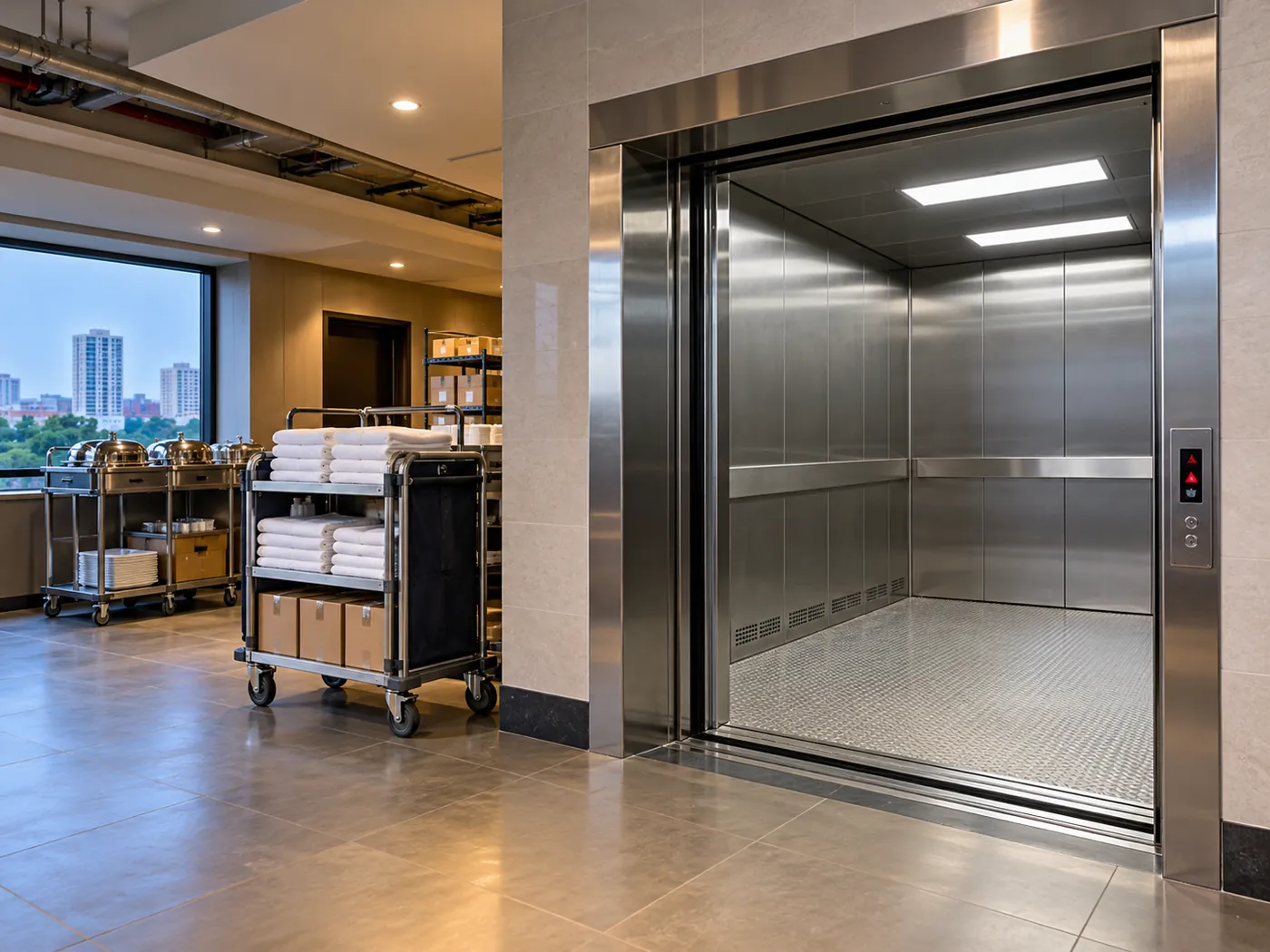
There is no single car size or load rating that fits every hotel. The final details depend on the equipment, the building and the way staff will use it. These are the points to agree during the site survey.
| Item | What to check | Why it affects the choice |
|---|---|---|
| Rated load | Loaded cart weight, supplies and any riders the model is approved to carry | The lift must suit the actual load and intended use. |
| Car and door size | Widest and longest trolley, handle clearance and door opening | Staff need room to roll goods in and out without striking the entrance. |
| Stops and travel | Service floors, floor heights and busy periods | These shape the travel layout, doors and traffic plan. |
| Shaft and structure | Available lift well, pit, overhead, support and access for installation | Equipment must fit the site and the approved drawings. |
| Power and rescue | Site electrical supply, earthing and proposed emergency arrangements | Power and rescue features vary by selected system. |
| Working conditions | Heat, humidity, cleaning water, kitchen vapour and pit water risk | Site conditions can affect equipment placement and protection. |
| Safety and approvals | Manufacturer requirements, relevant BNBC provisions and project approvals | Design and testing must be checked for the actual installation. |
Some hotel floors have room for a straight entry. Others need the lift near a corner or a narrow staff corridor. Door position and landing space can matter as much as car capacity.
Share a simple floor plan, even if the building is still in design. The service route can then be reviewed alongside the shaft and door arrangement.
Mark the kitchen, laundry, store, banquet area and service floors.
Note its width, depth, height and loaded weight.
Allow for turning, waiting and the door swing or opening type.
Say whether a person must ride with the cart. This changes the lift specification.
For food trays and small items, a dumbwaiter lift may be the right product. If staff need to take a full cart between floors, discuss a service elevator designed for that task.
For heavy factory loads or pallets, see our goods lift page instead.
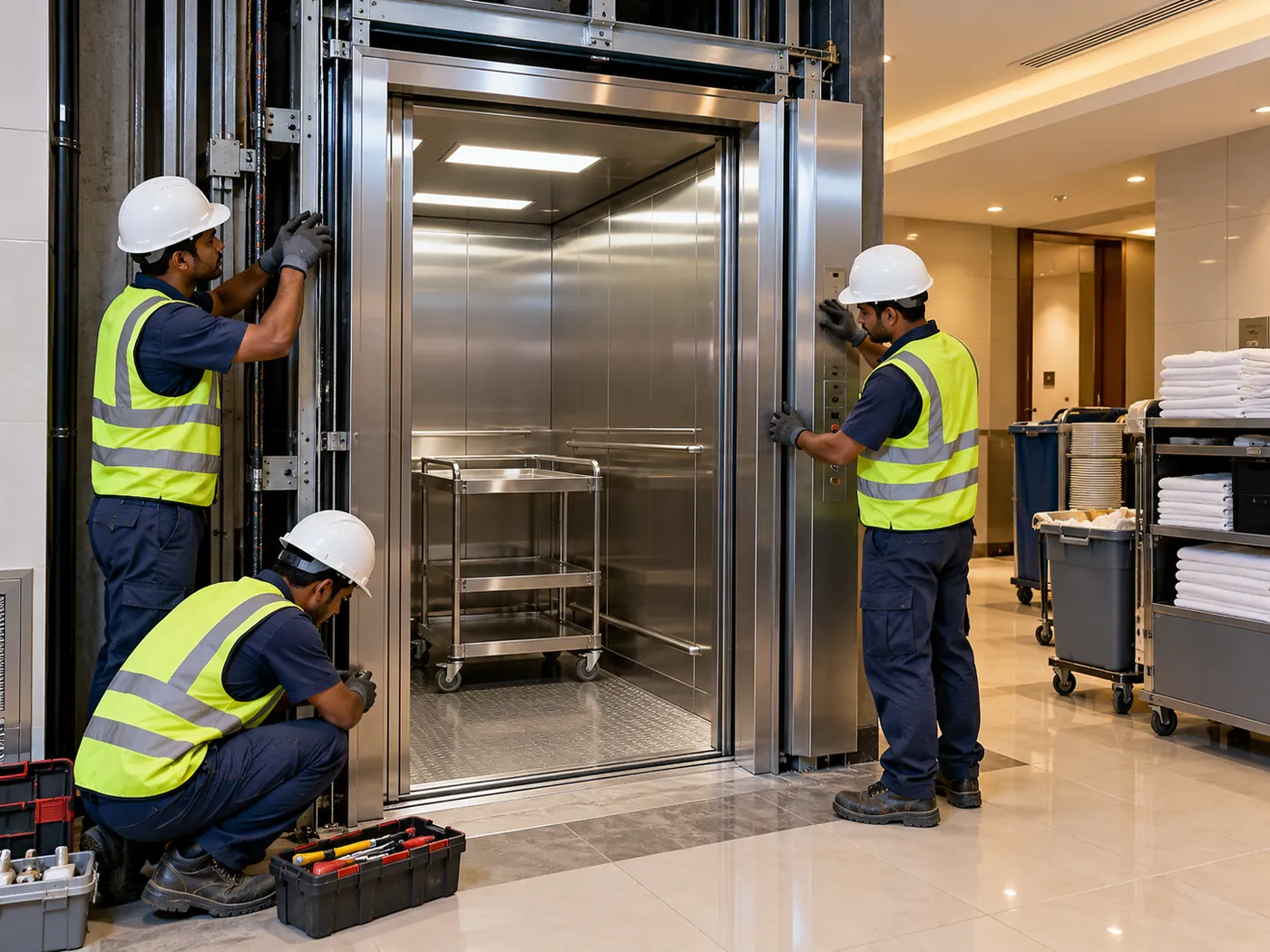
The lift shaft often sits beside kitchen services, a laundry or a staff corridor. A late change to the door or floor level can delay fitting work. Check these items before the civil work is finished.
List loads, trolleys, stops, service times and staff travel needs.
Measure shaft, pit, overhead, landing access and power conditions.
Confirm car and door details with the building team before major finishes.
Follow the approved equipment drawings and required checks before use.
For the full construction scope, see lift installation in Bangladesh.
Breakfast service, cleaning rounds and evening events can all put carts on the lift. Choose a maintenance window with the building team and report faults as soon as they appear.
The service schedule and checks must follow the selected equipment. For a wider scope, visit lift maintenance.
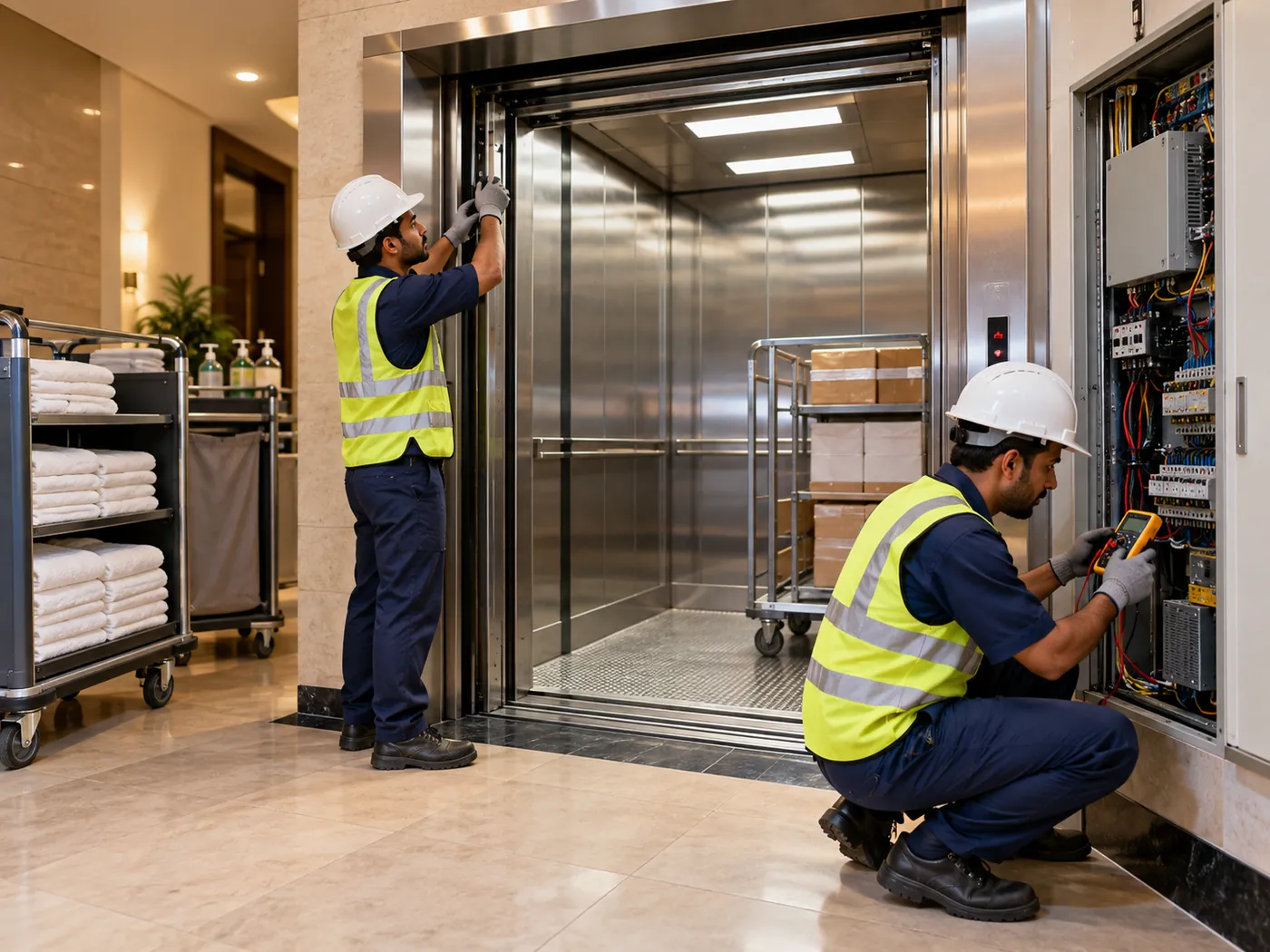
A door fault during the morning room-service run can affect several teams. Staff should stop using a lift that shows signs of unsafe operation. Never force a door or bypass an interlock to finish a trip.
If anyone is trapped, follow the building's lift emergency procedure and contact its designated rescue or service team. Do not attempt an untrained rescue.
A service lift price depends on the work it must do and the site where it will be fitted. A quote for a small back-of-house lift will not match one for a large hotel with several service floors.
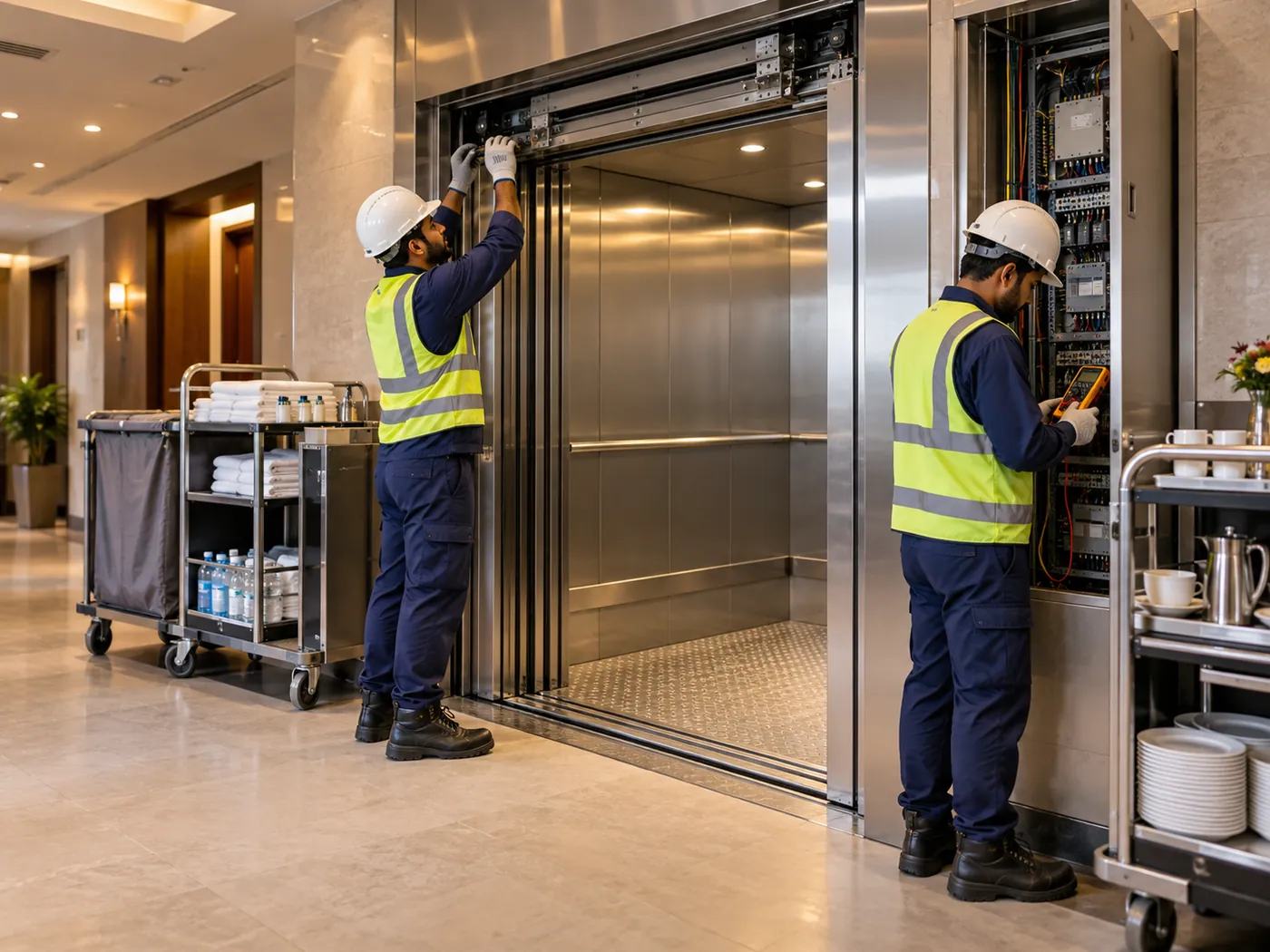
Cart size, weight, fittings and permitted staff use can change the lift package.
Travel height, number of landings and door position affect the design and work.
Civil changes, wiring, earthing and site access may need separate costing.
Drive system, imported parts, installation, warranty terms and future servicing affect the total quote.
These are worth settling before you approve the model or the shaft drawings.
Yes, if the selected service elevator is designed and approved to carry people. Staff cannot ride in a goods-only dumbwaiter or material lift. Confirm the intended use in the equipment specification.
Weigh the heaviest normal load with its trolley. Measure the full cart and its handles. If staff will ride, include them in the approved load and car arrangement. The supplier must confirm the final rating.
It may be possible. The site needs a review of the shaft space, structure, pit, overhead, landing access and power. Do not order a model based on floor count alone.
No. A food lift is normally chosen for meals, trays and kitchen items. A larger service elevator may handle full trolleys and, if designed for people, hotel staff. See the food lift page for that use.
The price changes with car size, rated load, stops, doors, shaft work, equipment type and installation scope. Send drawings and load details for a project quote; confirm what is included before comparing offers.
Share the building location, floor count, available shaft size, a photo or plan, the largest trolley size, its loaded weight and whether staff need to ride in the car.
Send the site location, the floors to be served and a few details about your largest trolley. Dhaka Lift Solutions can review your enquiry and discuss the next step for a service lift quotation.