
Moving Walk Bangladesh for Malls, Airports & Public Buildings
Plan a travelator around passenger flow, carts or luggage, travel distance, incline, landing space, structure, power and the real operating environment.
What is a moving walk or travelator?
A moving walk is a continuous passenger conveyor used to reduce walking effort across a long horizontal route or a gentle incline.
It is commonly considered for shopping centres, supermarkets, airports, transport terminals, exhibition buildings and other places where people may be moving with luggage, trolleys or shopping carts.
On this website, “moving walk”, “travelator”, “moving walkway” and closely related commercial terms stay on this URL. The separate escalator page covers stepped escalators for larger floor-to-floor level changes.
Choose a moving walk when the route itself creates friction
A travelator works best when it solves a clear movement problem: a long concourse, a trolley-heavy retail route, a terminal connection or a gentle change in level where continuous passenger flow matters.

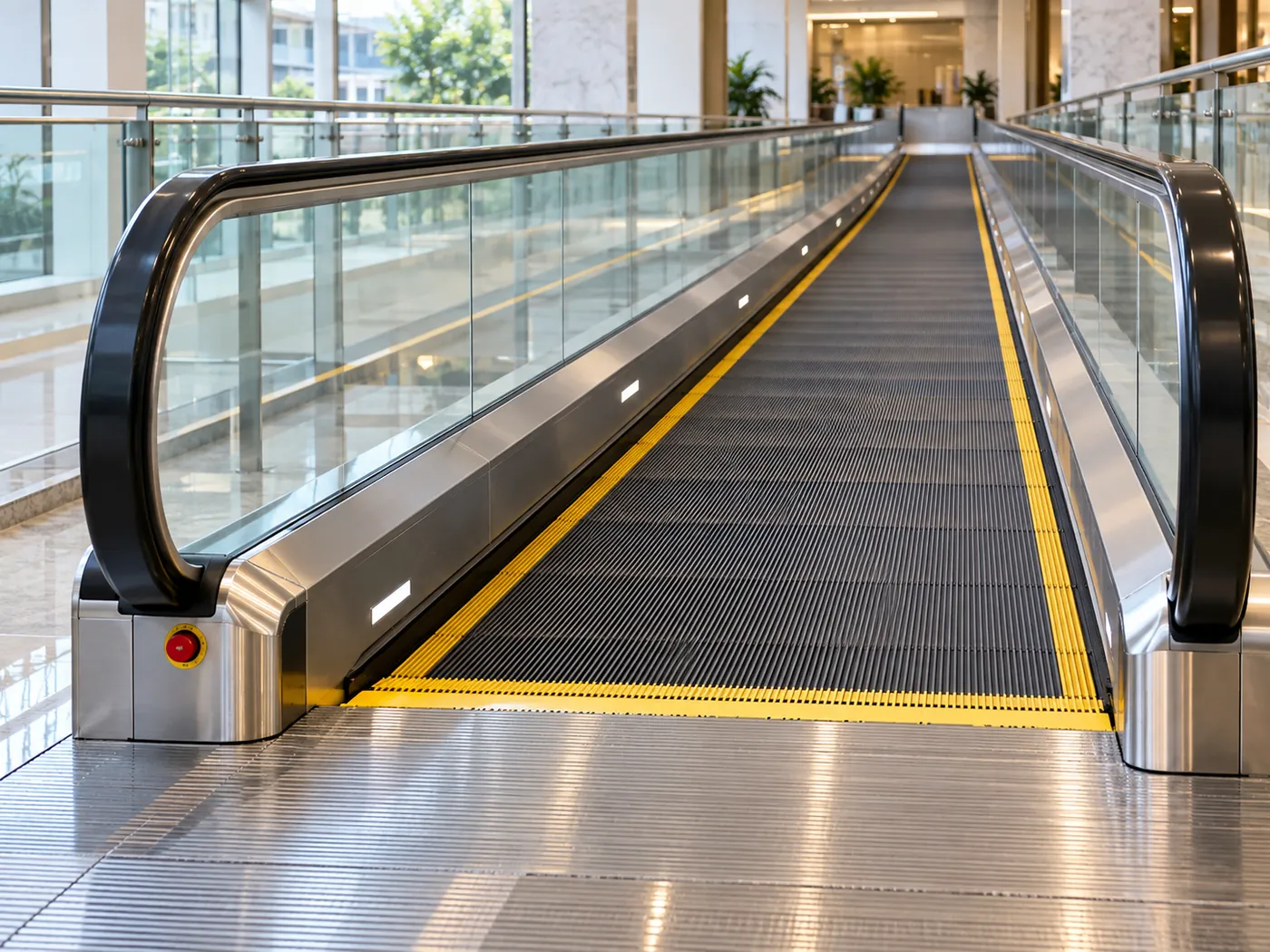
The entry and exit zones deserve as much attention as the moving surface
Users join and leave the travelator at the landing, so the transition area should remain clear, visible and easy to understand. Final safety devices and clearances must follow the selected equipment and applicable requirements.
What has to be fixed before the moving walk is ordered?
Moving walks are long pieces of building equipment. Their truss, supports, landings, openings and access routes should be coordinated early with the architect, structural engineer, MEP team and equipment supplier.
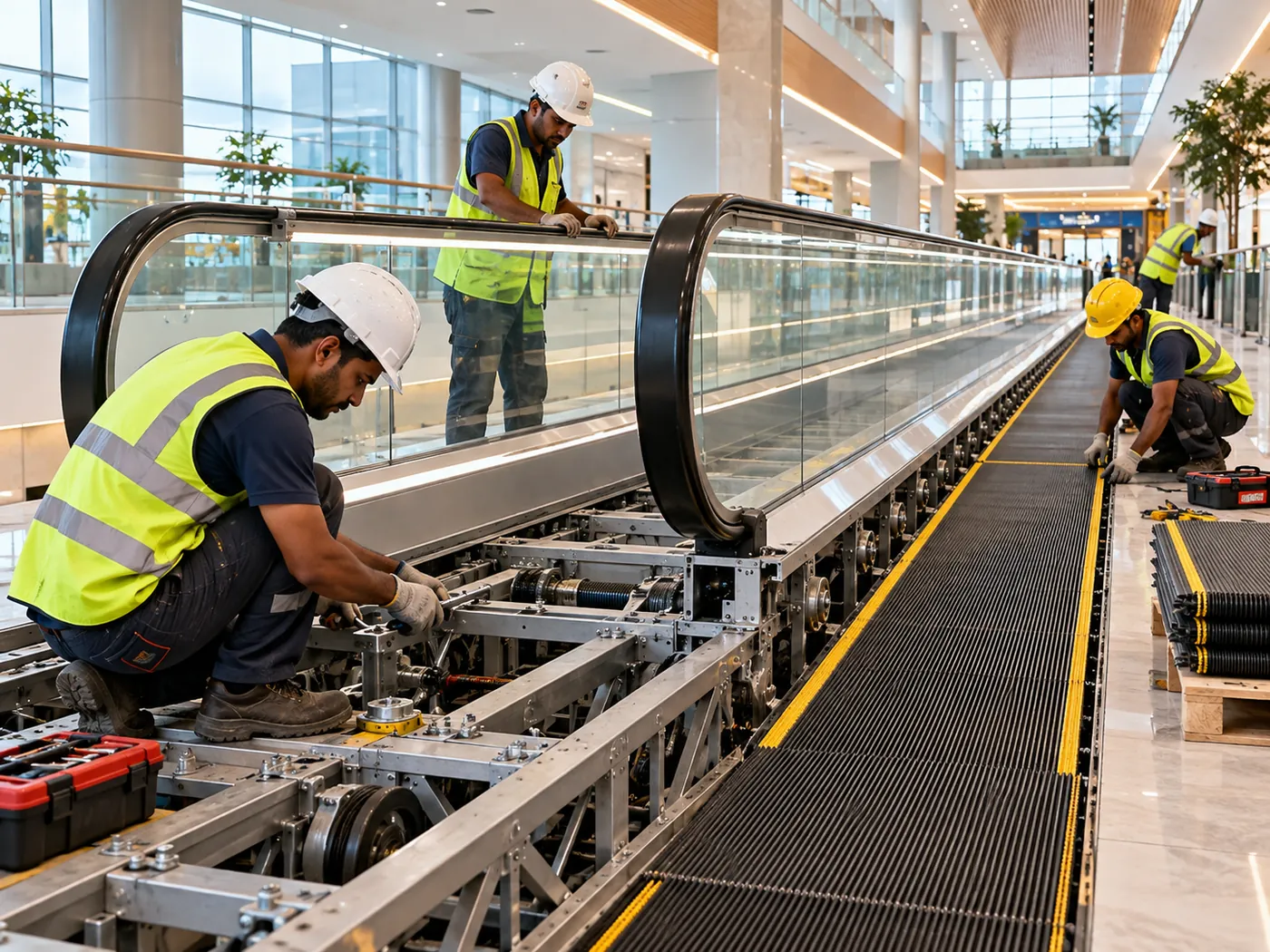
Installation planning starts with the truss route and building readiness
A moving walk cannot simply be carried through a finished building like a small component. Delivery openings, lifting points, final supports, floor finishes and work-area access need to be planned around the equipment sections and site sequence.
Final installation must follow the selected system's drawings, procedures and project conditions.

Maintenance should be planned around the actual traffic and environment
Travelators can run for long periods in busy buildings. Inspection and maintenance should follow the selected equipment, manufacturer instructions and operating conditions rather than a generic schedule copied from another project.
Keep access panels, machine areas and landing zones free from stored goods or permanent finishes that make servicing difficult.
They solve different circulation problems
The two systems may appear beside each other in malls and transport buildings, but they should not be selected by appearance alone.
| Planning point | Moving walk / travelator | Escalator |
|---|---|---|
| Main movement | Long horizontal routes or relatively gentle inclined movement. | More direct movement between different floor levels using steps. |
| Carts / luggage | Can suit luggage or approved trolley movement where the selected system and operating rules allow it. | Normally selected around passenger movement rather than shopping-cart transport. |
| Building space | Longer run length can require substantial floor area and structural coordination. | Typically concentrates vertical movement in a shorter horizontal footprint. |
| Best question | “How do we reduce effort along this route?” | “How do we move people between these levels?” |
| Related page | This page owns moving-walk and travelator commercial intent. | See Escalator Bangladesh. |
What affects moving walk price in Bangladesh?
There is no useful single market price for every travelator. Length, incline, width, duty, finishes, environment, structural work and logistics can change the supplied and installed scope substantially.
Moving walk questions to answer before ordering
What is the difference between a moving walk and an escalator?
A moving walk uses a continuous flat or gently inclined moving surface, while an escalator uses steps for larger changes between levels. The right choice depends on the route, level change, passenger flow and whether luggage or carts are part of the movement pattern.
Can shopping carts use a travelator?
Only where the selected travelator, cart system and operating arrangement are designed for that use. Do not assume every moving walk is suitable for shopping carts simply because it is inclined.
What moving walk dimensions do I need?
Length, width, inclination, landing space and structural supports depend on the building route and selected product. Final dimensions should come from the project-specific manufacturer drawing.
Can a moving walk be installed outdoors?
Some product families are designed for semi-outdoor or outdoor conditions, but protection requirements vary. Drainage, water entry, corrosion, heat, humidity and electrical protection should be reviewed for the actual site.
What should I send for a moving walk quotation?
Send the building use, project location, start and end levels, horizontal travel distance, any vertical rise, available width, expected passenger/cart flow, drawings, site photos and any exposed or outdoor conditions.
Share the route before choosing the travelator
A useful moving-walk quotation should show how the proposed equipment fits the actual distance, incline, landings, structure, power and pedestrian flow.
- Building type and project location
- Start and end points / floor levels
- Horizontal travel distance and vertical rise
- Available installation width
- Passenger, luggage or trolley usage
- Drawings, site photos and environmental conditions