Main control board
Processes operating inputs and sends control outputs according to the controller's programmed logic.


Need a controller, control-panel component or help with a controller fault? Start with the existing controller model, clear panel photos and lift details so the technical requirement can be checked before repair or replacement.
The controller coordinates the lift's operating commands and signals. Depending on the system, the control panel can contain a main control board, power and protection devices, relays or contactors, terminals and interfaces with the drive, doors, position system and safety circuits.

A lift controller is not simply one interchangeable circuit board. It works with the rest of the elevator's electrical and control system.
Inputs can come from landing calls, car commands, position devices, doors and safety-related circuits. The controller processes the required logic and sends commands to the relevant equipment.
Because systems differ, a replacement part should not be selected only because its cabinet or circuit board looks similar.
The exact arrangement depends on the controller design. These are common functional groups, not a specification for every lift.
Processes operating inputs and sends control outputs according to the controller's programmed logic.
The controller and drive work together on movement commands. The VVVF drive itself is a separate component with its own application and compatibility requirements.
Electrical switching devices may be used for control and power functions depending on the panel architecture.
Provides the required supply for controller electronics and related circuits according to the system design.
Circuit protection and monitoring components form part of the electrical panel arrangement.
Terminals and wiring connect the panel to devices in the car, shaft, landing and other parts of the lift installation.
Controller problems can overlap with other electrical or mechanical issues. A fault message is useful evidence, but it does not always prove which component caused the problem.

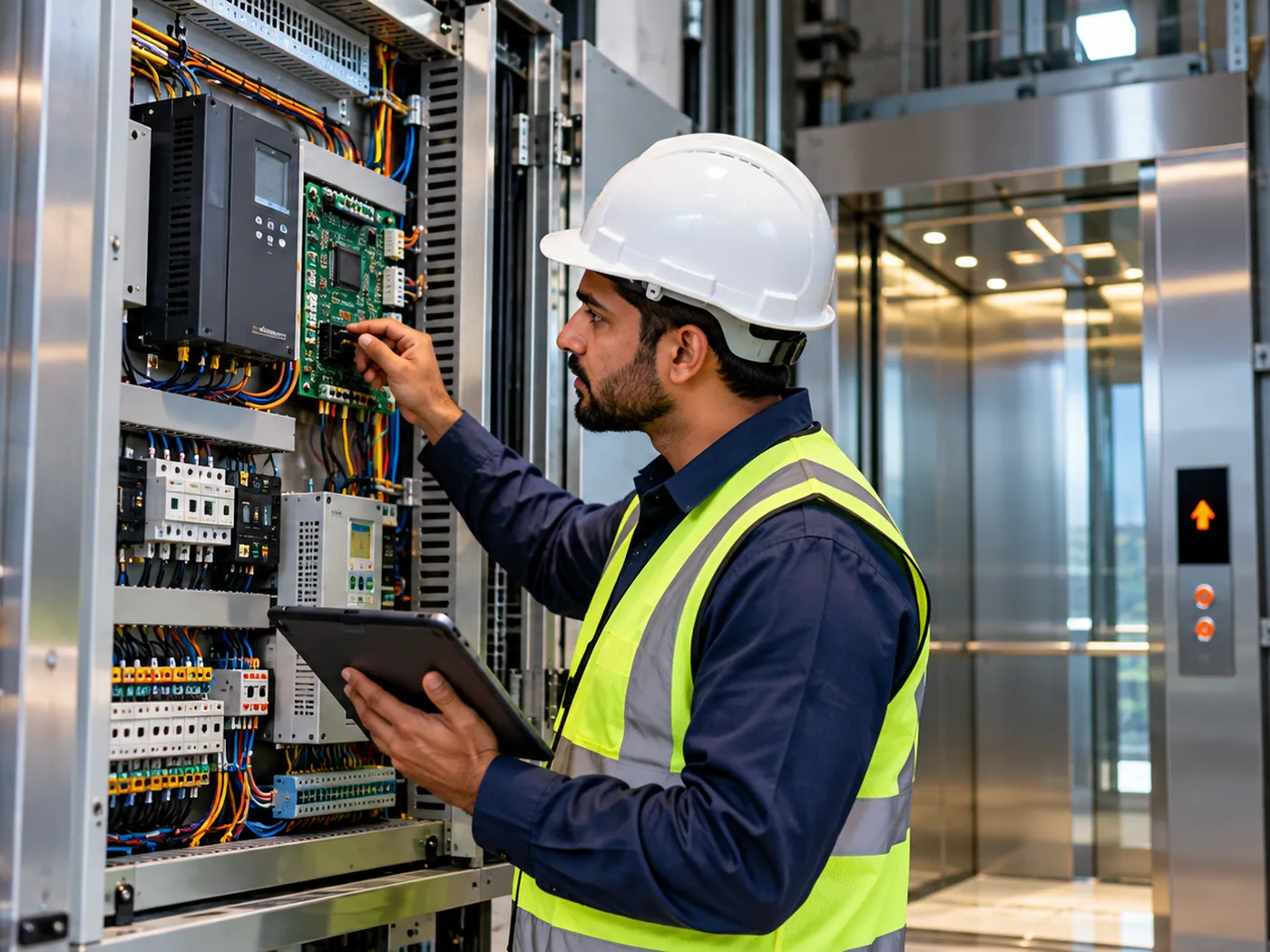
A lift that stops, resets or shows a fault does not automatically need a complete new controller.
The useful first step is to record what the lift is doing, check the controller information and inspect the related system safely. Fault history, status indicators and drive information can help trained technicians narrow the investigation.
Note when the fault occurs and whether the lift stops, fails to start, resets or behaves differently at a specific stage.
Take clear photos of displayed fault codes or status information before power cycling changes the evidence.
The investigation may need to include wiring, doors, sensors, the drive, safety circuits or other connected devices.
Record the controller, PCB and drive identification that is actually visible on the installed equipment.
Send full-panel and close-up photos so connectors, boards and existing arrangements can be reviewed.
Provide the lift type, number of stops and relevant equipment information where known.
Include drive or inverter details where the controller and drive operate as part of the same motion-control system.
Explain the actual problem instead of requesting a board only because a technician suspects it may be faulty.
Matching physical size is not enough. Connections and system architecture also matter.
Some controller issues may involve an individual board, relay, power-supply component, wiring fault or another connected device. Other cases may justify wider controller replacement or modernization.
The correct scope depends on the installed system, condition of the equipment, availability of compatible components and the wider goal for the lift.

Better information reduces guesswork and helps determine what needs to be checked before a repair, replacement or quotation.
Keep the enquiry on the page that matches the actual component or project scope.
Short answers for controller, control-panel and replacement enquiries.
It is the control system that processes operating inputs and sends commands to relevant lift equipment. The complete control panel can contain the main board, switching devices, protection equipment, power supplies, terminals and interfaces with other elevator systems.
No. They can work closely together, but the controller and VVVF drive have different functions. The controller handles operating logic and signals, while the drive manages motor operation and speed in applicable systems.
Sometimes a board may be the required component, but that cannot be confirmed from the symptom alone. The exact board, controller model, connectors, software or parameters and related system compatibility need to be checked first.
Send the exact controller or board model, clear photographs and lift details. Price depends on the actual component and scope, so a reliable quotation should follow identification and compatibility review rather than a generic web price.
Take one full control-panel photo plus clear close-ups of the controller identification, PCB labels, connectors, drive details and any active fault display. Do not remove covers or touch energized equipment simply to take a photograph.
No. Elevator controllers and their components are system-specific. Compatibility should be verified against the installed equipment and project requirements before supply or replacement.
Send clear controller photos, model information, fault details and basic lift information. The technical requirement can then be reviewed before a compatible part, repair scope or modernization option is discussed.