
Freight Elevator Bangladesh: Built Around the Load
Moving pallets, machinery or bulky stock between floors takes more than a large lift cabin. The floor, doors, shaft and daily workload must suit what your team moves. Dhaka Lift Solutions can review your freight elevator requirements before a system is selected.
Four questions that change the design
When does a building need a freight elevator?
A freight elevator moves goods and equipment between floors. It is chosen when the size, weight or volume of the load calls for stronger loading arrangements than a normal passenger lift.
It may serve a factory's production and packing floors, a warehouse's storage levels, or a commercial building's delivery route. The best fit depends on what enters the car and what happens at each landing.
Do not assume that every freight lift can carry people or a forklift. The approved use and loading method must match the chosen model and the requirements that apply to the project.
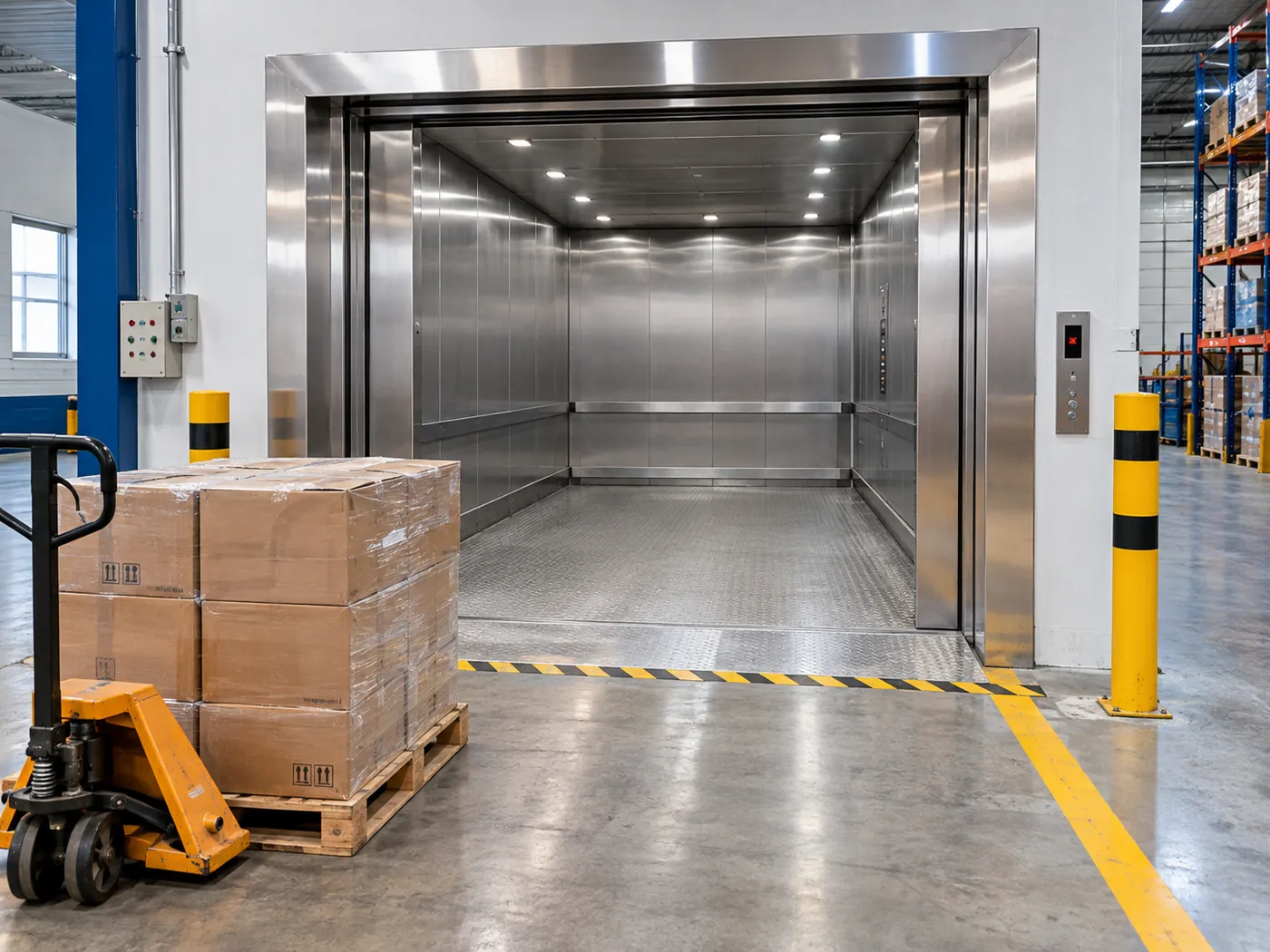
The door matters as much as the car
A lift may have room for a heavy pallet but still be hard to use. The pallet may need a sharp turn at the landing, or a loaded trolley may catch on the sill.
Measure the journey from the work area to the car, then out at the next floor. Check the narrowest point, not just the largest space.
- Confirm clear door width and height, not the outside frame size.
- Allow room to line up the load at every landing.
- Check floor leveling and the threshold for wheeled loads.
- Say if goods must enter one side and leave through the other.
- Choose suitable door and cabin protection for regular contact with trolleys.
Trace the load from start to finish
Before choosing a lift position, watch how your team moves the largest regular load. A few minutes on the floor can reveal a tight corner or a loading bottleneck that is not clear on a drawing.
Where is the goods load prepared? Is a pallet jack, trolley or other equipment used?
Measure the route, turning space and clear area in front of the landing door.
Check load spread, wheel contact, usable floor space and how the load is held during travel.
Check that the same load can exit and turn safely without blocking work.
What should a freight elevator proposal confirm?
Ask the supplier to connect each equipment choice to the actual load and site. The table below is a practical brief, not a universal specification. Final dimensions and safety arrangements depend on the selected system.
| Design item | What to provide | What to confirm in the offer |
|---|---|---|
| Rated load and car floor | Heaviest loaded weight, wheel positions and whether weight is spread or concentrated. | Capacity, usable floor area, floor strength and any loading limits. |
| Industrial trucks and trolleys | Type of equipment, its own weight, wheel load and whether it travels with the goods. | Whether the proposed model permits that loading method; no forklift access should be assumed. |
| Car and landing doors | Largest item and the clear approach at every floor. | Door opening, direction, interlocks, protection and single- or opposite-side access. |
| Stops, travel and duty | Floors served, floor heights and busy-hour trip pattern. | Proposed drive, operating speed and suitability for the expected use. |
| Shaft and structure | Clear shaft size, pit, overhead, wall or steel frame and site drawings. | Builder's work, support points, installation clearance and maintenance access. |
| Power and site conditions | Available supply, heat, dust, moisture and any standby-power plan. | Electrical requirements, safety and rescue functions, and protection suited to the site. |

A pallet truck changes the loading calculation
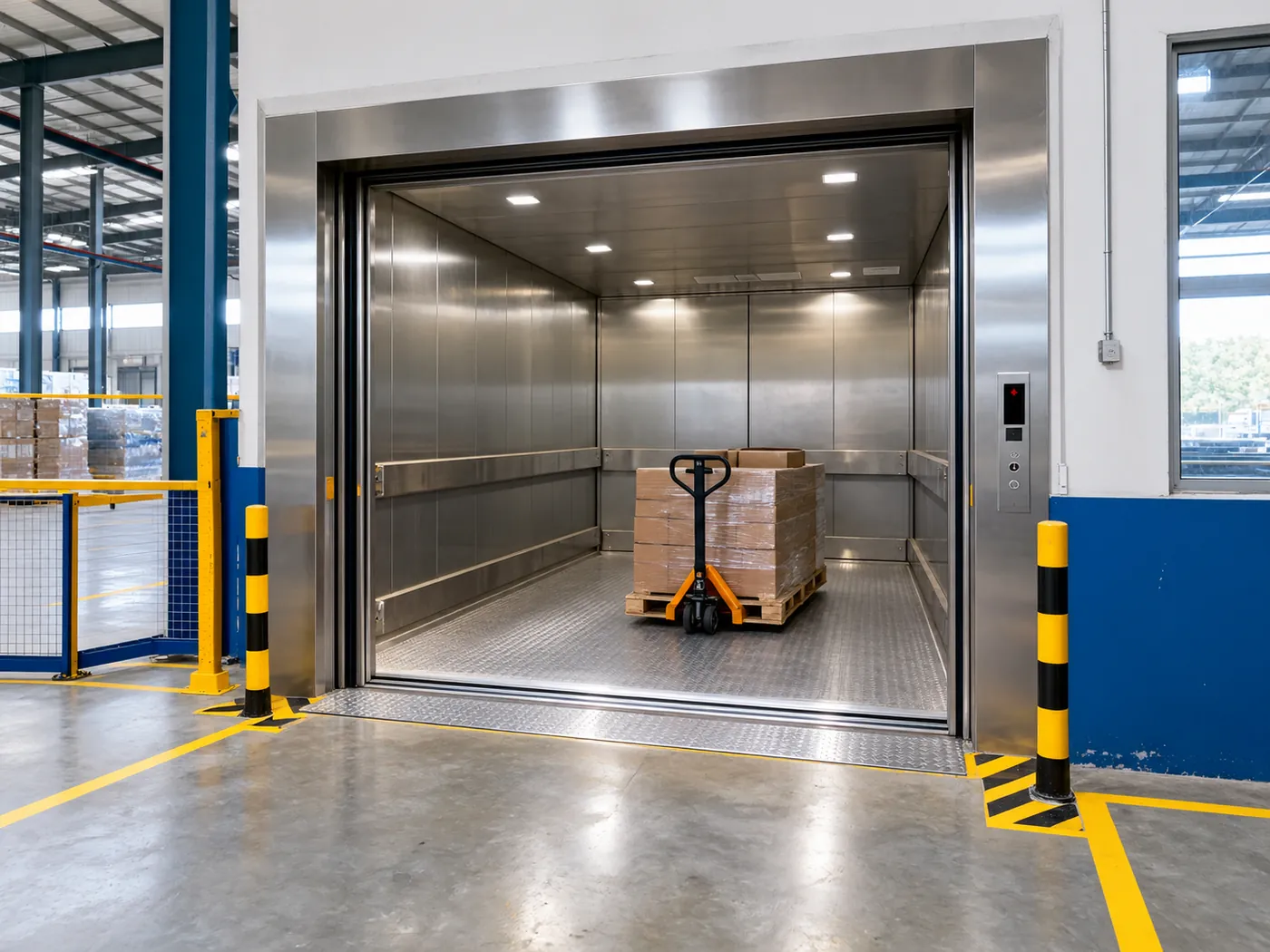
The rated load is important, but it does not tell you how much weight a small patch of the car floor can take. A loaded trolley or pallet truck may put much of its weight onto a few wheels.
Powered industrial vehicles need a separate check. The car floor, sill, frame and loading method must all suit the proposed equipment.
- Include pallet and vehicle weight in the loaded total.
- Ask for confirmation of floor and wheel-load suitability.
- Check clear space for the operator or loading equipment as applicable.
- Do not assume people may ride unless that use is permitted for the selected model.

Agree the site work before the lift is ordered
Freight elevator installation involves the lift supplier and the building team. Shaft readiness, landings, support structure, power and delivery access all need to match the approved equipment drawings.
Check the actual loads, building access, shaft and electrical supply.
Agree the car, door arrangement, support needs and builder's work.
Plan mechanical, electrical and landing work around the building schedule.
Check the agreed controls, doors, leveling, safety functions and operating instructions.
What affects freight elevator price in Bangladesh?
A published price cannot tell you what your building will need. A heavier load may call for a different car floor, doors, structure and drive. A retrofit may also need more civil work than a new shaft prepared for the selected equipment.
Ask for the equipment and site-work scope to be itemised so you can compare offers fairly.
Capacity, wheel loading, car size and protective finish.
Floor count, travel height, operating pattern and drive selection.
Clear width, door type, protection and through-car needs.
Pit, overhead, shaft changes, support steel and floor interfaces.
Electrical supply, cable route, emergency functions and any planned backup.
Delivery, installation, testing, duties or taxes where relevant, warranty scope and maintenance terms.
What makes a useful freight elevator quotation?
Send measurements or site photos if you have them. If the shaft is not built yet, say so. A technical review can then identify what still needs to be measured before the final specification and cost are agreed.
Plan for the work the lift will do every week
For a busy building, a stopped freight elevator can hold up stock or production. Ask how the selected system will be maintained and who will handle routine checks.
Freight elevator FAQs
These answers cover the questions that tend to change a freight elevator plan.
How do I choose freight elevator capacity?
Start with the heaviest load, including its pallet or handling equipment. Also give the supplier the largest load dimensions, wheel positions and number of trips. The final rating and car-floor design must suit the whole loading method.
Can a forklift enter a freight elevator?
Only if the proposed model and its loading arrangement are designed for that vehicle. Vehicle weight, axle or wheel loads, floor strength, door sill and landing access all need a specific check. Do not treat forklift access as standard.
What freight elevator size or shaft size do I need?
There is no standard size that fits every project. The largest load, car layout, door type, guide arrangement, pit and overhead all affect the space needed. Use approved equipment drawings before final civil work.
Can staff travel with the goods?
It depends on the selected elevator and its approved use. Some goods-only systems are not intended for passengers. Tell the supplier if an operator must ride with the load so the right equipment and safety requirements are reviewed.
Should I choose hydraulic or traction?
Compare the proposed designs against the load, travel, speed, shift use, available space and service needs. Neither drive type is automatically the best choice for every building.
How is freight elevator price worked out in Bangladesh?
Load, car size, door layout, stops, shaft condition, power and installation work all affect cost. Ask which civil work, delivery, taxes, testing and after-sales items are included in each offer.
What details help you prepare a quotation?
Share the location, number of floors, load weight and dimensions, type of trolley or vehicle, available shaft size and photos or drawings. Also note whether the building is new or already in use.
Show us the load and the route it needs to take
A weight estimate, the largest pallet or machine size, floor count and a few site photos can get the discussion started. We can review the requirements and identify what needs to be checked at the building.