
Garments Factory Cargo Lift Bangladesh
Move fabric, cartons, garment racks, production materials and finished goods between factory floors with a lift planned around your actual load, trolley size, shaft and daily workflow.
What actually needs to travel between floors?
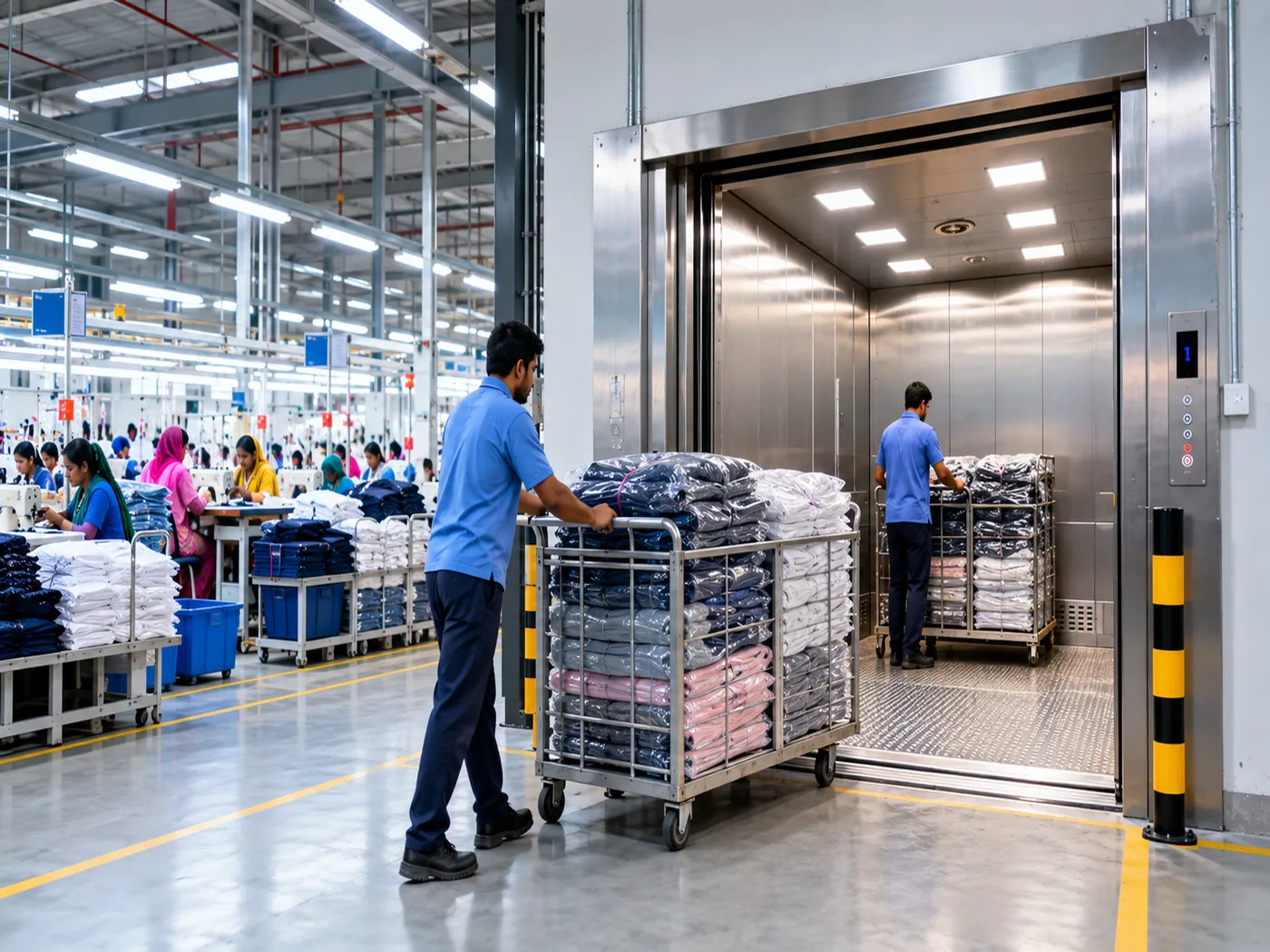
A garment factory may move very different loads during the same working day. Fabric can arrive in rolls or bundles. Production material may move in bins or trolleys. Finished garments may leave the floor in racks, wrapped bundles or cartons.
That is why lift selection should start with the real movement of material rather than a generic cabin size.
For broader industrial applications, see the factory lift page.
Identify how fabric, accessories, cartons and other incoming material reach the building and which floors need access.
Check the carts, racks, bins or bundles used between cutting, sewing, finishing and related production areas.
Measure packed cartons, garment racks or trolley loads that regularly travel toward storage and dispatch.
Consider busy production periods rather than planning only around the lightest everyday load.

Capacity is more than the weight of the garments
Start with the heaviest normal load that will enter the lift. Include the trolley, rack, pallet or other handling equipment when it travels with the goods.
Then check physical size. A light but bulky garment trolley may need more usable cabin area than a denser load of the same weight.
A large cabin is not useful if the trolley cannot enter easily
Door width, landing space and the approach to the lift should be considered together. This is especially important where garment racks or wheeled cages are part of the daily workflow.

Match the lift to the way materials are handled
The examples below are planning questions, not fixed lift specifications. Actual capacity and dimensions should be confirmed for the project.
Check the building before finalizing the lift
An existing garment factory and a factory still under construction need different planning. Existing shafts should be measured on site. New construction gives the project team more opportunity to coordinate the lift with structural and production layouts.
- Clear shaft width and depth
- Required stops and total travel
- Pit and overhead condition
- Landing-door arrangement
- Available electrical supply
- Material route around each landing
- Applicable fire and building requirements
Site conditions should be part of the specification
Garment factories in Bangladesh can differ significantly in building age, production layout, power arrangements, shaft condition and material-handling practice.
Final technical decisions should therefore be based on the actual factory rather than copied from another project.

Plan the landing area as carefully as the lift cabin
The lift connects several parts of the production process. Workers still need a clear route to bring material to the entrance, position the trolley, unload at the destination and move away from the landing.
Good planning looks at that complete journey. A suitable lift in an awkward loading area can still create delays.
Information that helps define the right garments factory lift
You do not need a complete technical specification before making an enquiry. Start with practical project information.
Request a Lift QuotationGarments factory lift FAQs
What is a garments factory cargo lift used for?
It is used to move goods and production material between floors. Depending on the factory, this may include fabric rolls, bundled garments, cartons, racks, bins, accessories or loaded trolleys.
What capacity lift does a garment factory need?
There is no single capacity for every garment factory. Calculate the heaviest normal goods load and include the trolley, rack, pallet or other equipment that travels with it. Final rated capacity should then be confirmed for the selected lift system.
How do I choose the cabin size?
Measure the largest regular load, not only its weight. A garment rack or fabric trolley may need considerable floor area even when the load itself is relatively light. Door opening and turning space should be reviewed at the same time.
Can a cargo lift be added to an existing garment factory?
It may be possible, depending on the building and available space. The shaft, structure, pit, overhead, landings, power and surrounding material route need technical assessment before the lift is finalized.
What affects garments factory lift price in Bangladesh?
Project cost can change with capacity, number of stops, travel, cabin dimensions, door configuration, drive and control system, shaft condition, installation scope, civil or electrical work and selected equipment. A project quotation is more reliable than a generic fixed price.
Is a garments factory lift different from a warehouse lift?
The equipment categories can overlap, but the application is different. A garment-factory page focuses on production material, garment racks, fabric, cartons and movement between manufacturing departments. A warehouse lift is planned mainly around storage, inventory and warehouse loading workflows.
What should be checked before requesting a quotation?
Prepare the factory location, floors and stops, normal load, largest goods or trolley dimensions, available shaft size and building status. Photos or drawings are also useful where available.
Planning a cargo lift for a garment factory?
Share the material type, trolley or rack size, normal load, floors and available shaft information. Those details provide a practical starting point for the technical discussion.