Car and landing doors
Observe opening and closing, door tracks and sills, rollers or related mechanisms, reopening devices and applicable locking functions.

Preventive maintenance looks for developing lift problems before they turn into avoidable shutdowns. The work is planned around the equipment, operating demand, condition and technical requirements rather than waiting for a fault to stop the lift.
Preventive lift maintenance is planned inspection and servicing intended to find wear, contamination, loose connections, poor adjustment or other developing conditions early enough for appropriate action to be planned.
A door may start closing less smoothly. Floor levelling may become inconsistent. A component may develop unusual noise, heat, vibration or visible wear. Fault history can begin showing a pattern.
A preventive programme creates regular opportunities to notice those changes. The aim is not to replace every part early. It is to understand condition, carry out suitable routine work, and flag components that need closer attention, repair or planned replacement.

Passenger-visible items matter, but a proper technical visit also considers equipment outside the cabin. The exact scope varies by lift design and site.
Observe opening and closing, door tracks and sills, rollers or related mechanisms, reopening devices and applicable locking functions.
Check operating buttons, indicators, lighting, stopping behaviour, floor levelling and unusual noise or vibration during normal travel.
Inspect accessible connections and components, review relevant fault information and look for heat, contamination or other abnormal conditions.
Condition checks can include the drive machine, brake and associated mechanical equipment where applicable to the installed lift system.
Qualified technical work may include guide components, travelling cables, switches, sensors and other accessible equipment relevant to the lift design.
Check accessible pit equipment and the general condition of the area, including signs of water, debris or other conditions that require attention.
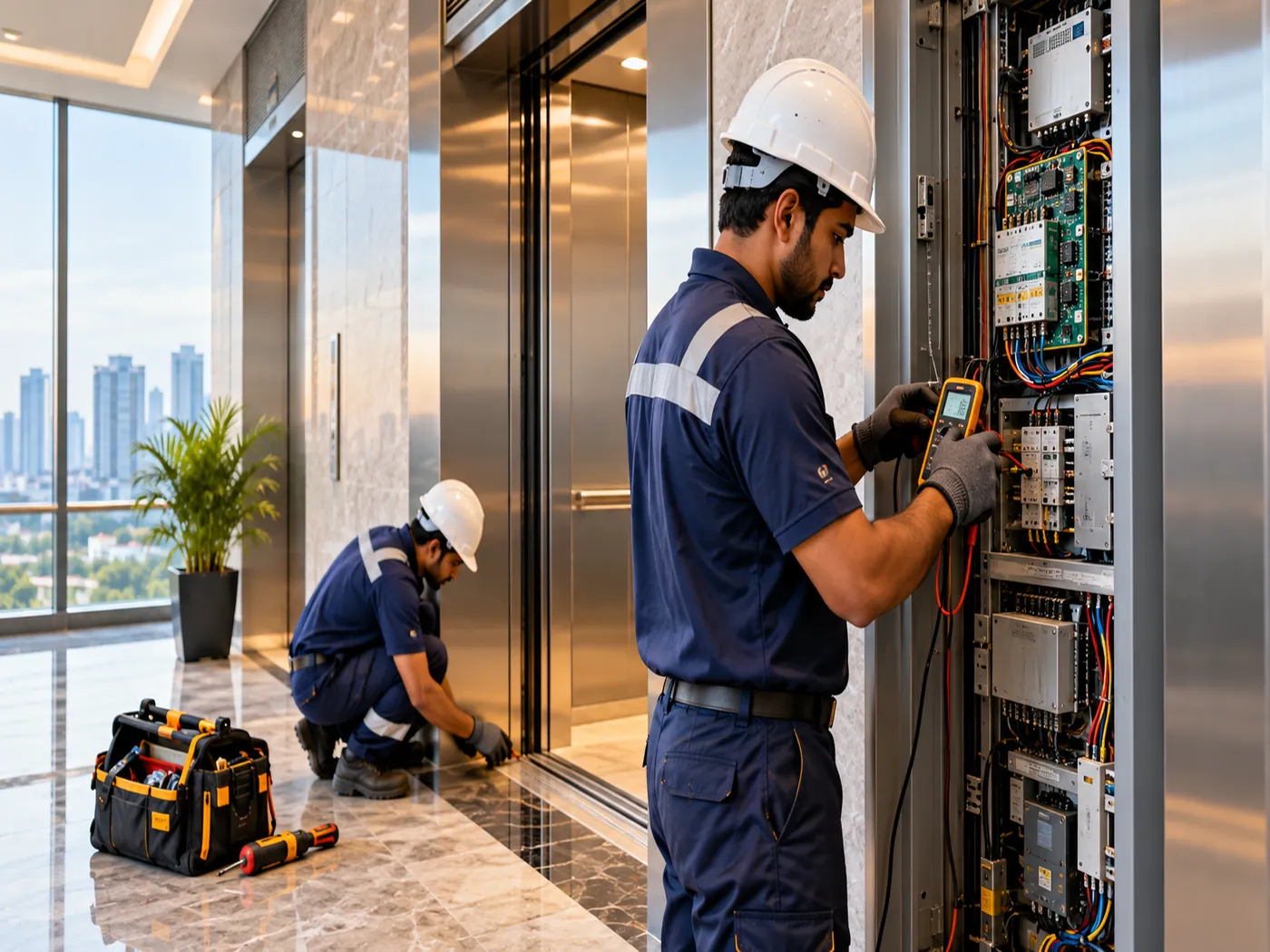
Start with reported problems, recurring call-backs, unusual behaviour and observations from the building team. Repeated small complaints can point to a developing condition.
Look for wear, looseness, contamination, damage, leakage where applicable, poor adjustment and other abnormal conditions within the planned service scope.
Cleaning, adjustment, lubrication or other service work should follow the requirements of the particular equipment. Not every component needs the same treatment on every visit.
Confirm the functions affected by the work and observe normal travel, doors, stopping and other relevant operating behaviour before returning the lift to normal use.
Note work completed, abnormalities found and any repair, replacement, further testing or monitoring that should be considered.
A checklist helps maintain consistency, but the value comes from noticing what has changed since earlier visits. The same noise, wear pattern or door adjustment recorded repeatedly can be more useful than an isolated tick in a box.
Depending on the lift and maintenance scope, technicians may review areas such as:

Building owners and facility teams do not need to open a controller or enter a lift shaft to help with preventive maintenance. Everyday observations from normal public areas can provide useful information for the technician.

An apartment lift with moderate daily traffic does not operate under the same conditions as a busy office, hospital, hotel or commercial building. Usage pattern is only one consideration.
Site teams should also pay attention to dust, heat and ventilation around technical equipment, moisture or water in the pit, power conditions, door traffic, previous faults and the age and condition of major components.
A fixed monthly phrase may sound simple, but service frequency and task scope should be based on the equipment, manufacturer guidance, condition, usage, maintenance history and applicable requirements.
High door-cycle counts, continuous passenger demand or critical building use can change which components deserve closer monitoring.
Water ingress, construction dust and poor technical-area housekeeping can create conditions that should be reported and addressed rather than treated as normal elevator operation.
Preventive maintenance becomes more useful when findings can be compared across visits. A record should make it possible to understand what was checked, what work was completed and what still needs attention.
Electrical and mechanical equipment can still fail unexpectedly. Preventive work is intended to manage condition and identify developing problems; it cannot guarantee that a lift will never stop.
If inspection identifies a failed component, significant fault or repair requirement, the next step may fall under a separate repair scope rather than routine preventive servicing.
Replacement recommendations should be tied to the condition, fault, wear, technical requirement or expected service need of the component rather than an unsupported universal replacement interval.
The following services have separate purposes. Keeping those boundaries clear helps building owners request the right technical scope.
For the broader scheduled elevator maintenance and servicing requirement.
View lift maintenance →For annual maintenance contract scope, coverage and ongoing service arrangements.
View Lift AMC →For diagnosis and corrective work when the elevator has developed a fault.
View lift repair →Looking for a practical owner/facility-manager reference? Read the elevator maintenance checklist or the separate preventive maintenance schedule guide.
The right programme starts with the actual lift and building, not a generic package.
It is planned inspection and servicing intended to identify developing mechanical, electrical or operational problems before they lead to larger faults. The exact work depends on the lift and maintenance scope.
There is no universal interval suitable for every elevator. Frequency should reflect manufacturer guidance, lift type, age, condition, usage, environment, maintenance history and applicable project or regulatory requirements.
No. Preventive maintenance describes a maintenance approach and technical activity. An AMC is a contractual arrangement that defines service coverage, duration, responsibilities, exclusions and other commercial terms.
No. It can help identify deterioration and recurring problems earlier, but no maintenance programme can guarantee that electrical or mechanical equipment will never fail unexpectedly.
Useful information includes the building location, lift type or available model details, number of stops, approximate operating history, present maintenance arrangement, known faults and any recent repair or shutdown history.
A stopped or faulty elevator may need troubleshooting or repair rather than routine preventive maintenance. For an existing fault, use the lift repair and troubleshooting service page.
Share the lift details, building use, current condition and known service history so the requirement can be reviewed before quotation or technical assessment.