Lift installation
For elevator erection and installation work before final testing begins.
Explore lift installation →
Installation is not the last step. A lift should be checked, tested and reviewed before normal use. Commissioning brings the mechanical, electrical, control and safety checks together before project handover.
Elevator commissioning is the structured final-check stage after installation. It verifies that the lift operates as intended, key safety functions respond correctly, identified defects are addressed, and the project is ready for the required inspection, documentation and handover process.
A lift can look complete while adjustment work is still needed. Doors may need tuning. Floor levelling may need correction. A control input, limit switch or safety circuit may need another check.
That is why commissioning should be treated as a technical verification stage, not as a ceremonial switch-on. The exact test programme depends on the lift system, project specification, applicable requirements and site conditions.

A useful commissioning plan moves from physical installation checks to controlled operation and safety verification. Test methods and acceptance limits must follow the selected equipment, approved documents and applicable project requirements.
Review visible installation condition, guide and moving components, accessible fixings, ropes or suspension components where applicable, pit equipment and machine or controller areas.
Check power, earthing, control connections, operating signals, call functions, indicators and relevant electrical safety circuits.
Confirm car and landing door operation, locking or interlock functions, reopening behaviour and accurate stopping at the landing.
Verify the safety devices relevant to the selected lift. This can include emergency stops, limits, governor and safety gear functions, buffers, overload protection and emergency functions.
Run the lift through the required operating sequence and observe travel, stopping, calls, direction, ride behaviour and other functions defined by the project and manufacturer.
Record observations, correct outstanding defects, repeat affected tests when required, and organize the agreed commissioning and handover records.
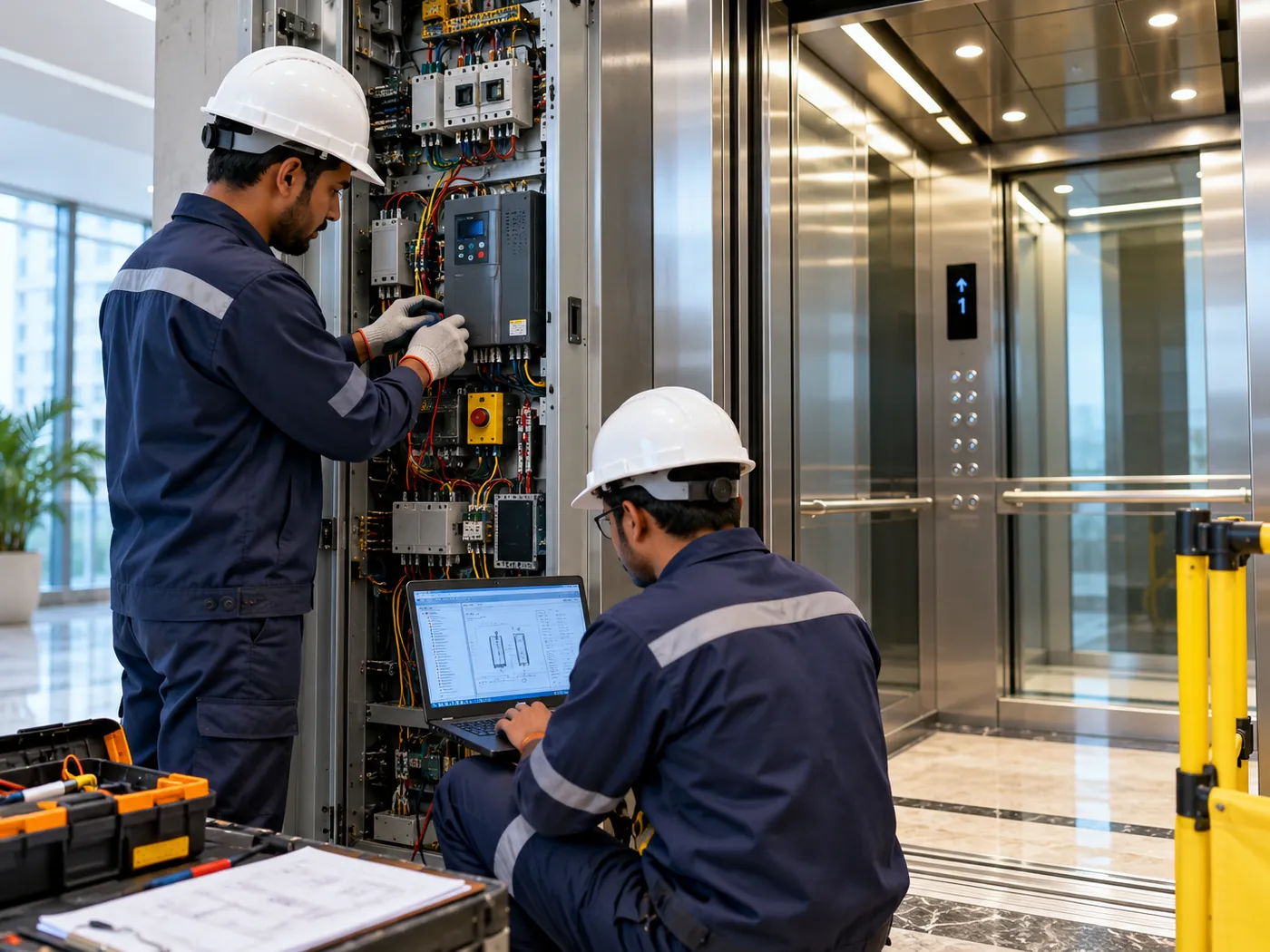
Review installation status and make sure incomplete civil, electrical or elevator work will not make the test unsafe or unreliable.
Check relevant shaft, pit, car-top, landing, controller and machine-area conditions before full operating tests begin.
Verify required connections, calls, indicators, switches, safety circuits and operating modes according to the selected system.
Observe travel in both directions, landing stops, levelling, door cycles and other operating functions required by the project.
Carry out the specified safety tests using the correct procedure, equipment and competent personnel. The exact tests vary by lift design.
Log defects or adjustments, close outstanding items and repeat relevant checks before the commissioning stage is signed off for handover.
Bangladesh building-code material for lifts includes testing of operating and safety conditions before normal service. It refers to functions such as motor and brake control, levelling, doors and door locks, rated-load operation, safety gear and buffers.
The actual commissioning method must still match the lift model, approved technical documents, project specification and the requirements that apply to that installation. Generic figures should not be treated as universal settings.

Lift projects in apartment buildings, offices, hospitals, hotels, factories and other developments often involve several parties. Elevator work can depend on civil completion, permanent power, earthing, generator or emergency-power arrangements, shaft readiness and access to technical areas.
If these items are unfinished, commissioning can stop halfway or produce misleading results. A pre-test review helps identify what must be completed before formal testing starts.
BNBC lift provisions available in current reference material state that new lifts are to be inspected and tested before being put into normal service. Project owners should confirm the current approval, inspection and certification requirements applicable to their building and authority.
For a wider overview of Bangladesh lift requirements, see our lift safety and BNBC guide.
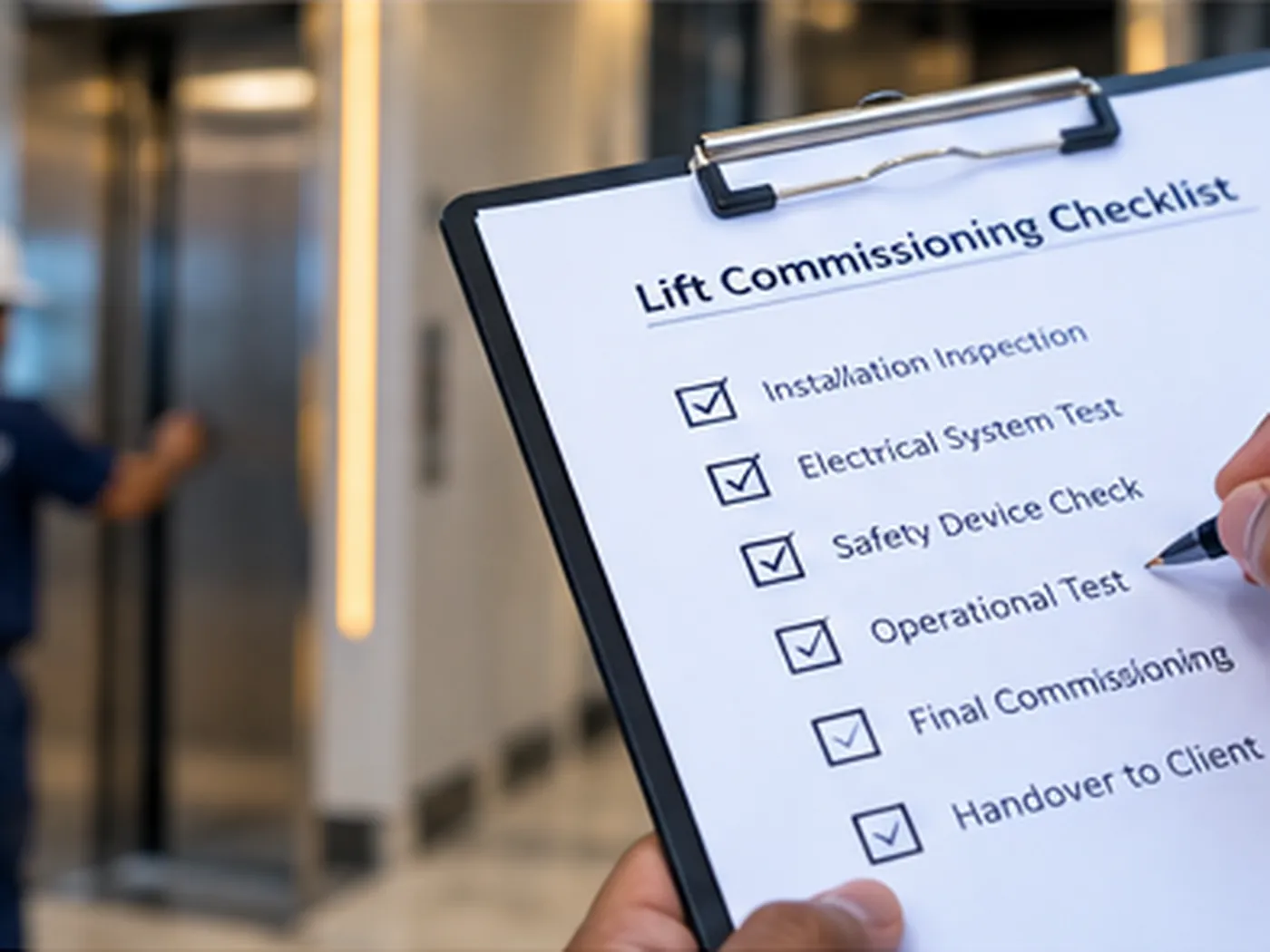
Handover should make the lift's status clear. The exact documents depend on the contract, equipment and project requirements, but the owner or consultant should know what was tested, what was corrected and what remains outstanding.
Commissioning is mainly the verification and handover stage for a newly installed or substantially changed system. Routine servicing begins after the lift enters operation.
Project commissioning does not automatically replace an inspection, certification or acceptance process required by an authority, consultant, client or contract.
Where a formal load test is required, the procedure, test load, measurements and acceptance criteria should follow the applicable technical requirement rather than an assumed generic value.
These are practical questions to settle before booking a commissioning visit.
It should start when the installation is sufficiently complete for safe, meaningful testing. Required power, access, shaft and pit condition, landing interfaces and relevant civil or electrical work should be ready.
No. Installation covers erection and connection of the lift system. Commissioning follows installation and checks whether the completed system operates and responds as required before handover.
Load-related testing may form part of the required commissioning or acceptance programme, but the exact scope depends on the lift, project specification and applicable requirements. Formal load-testing needs should be agreed before testing starts.
The issue should be recorded, investigated and corrected. The affected function should then be checked again before it is treated as closed.
Share the building location, lift type, current installation status, number of stops, available technical documents, known outstanding work and the specific testing or handover requirement. More accurate project information makes technical planning easier.
Send the project details, installation status and required testing scope. The technical team can review what information is needed before the next step.