
Cargo Lift in Bangladesh: Built Around the Goods You Move
What needs to go upstairs: cartons, a loaded pallet, a trolley or heavy equipment? The answer sets the lift's load, floor, door and cabin needs. Start with your largest real load before you choose a model.
What should a cargo lift do in your building?
A cargo lift moves goods between floors in a factory, warehouse or commercial building. Its job is to take the right load through the right opening, without slowing down the loading area.
A lift that can carry the weight may still be wrong for the work. A long machine may not fit the car. A pallet may fit inside but not pass through the entrance. A hand trolley may catch on a poor floor transition.
Share your loading process with Dhaka Lift Solutions before the equipment is selected. The final size, capacity and use conditions must follow the approved model and site drawings.
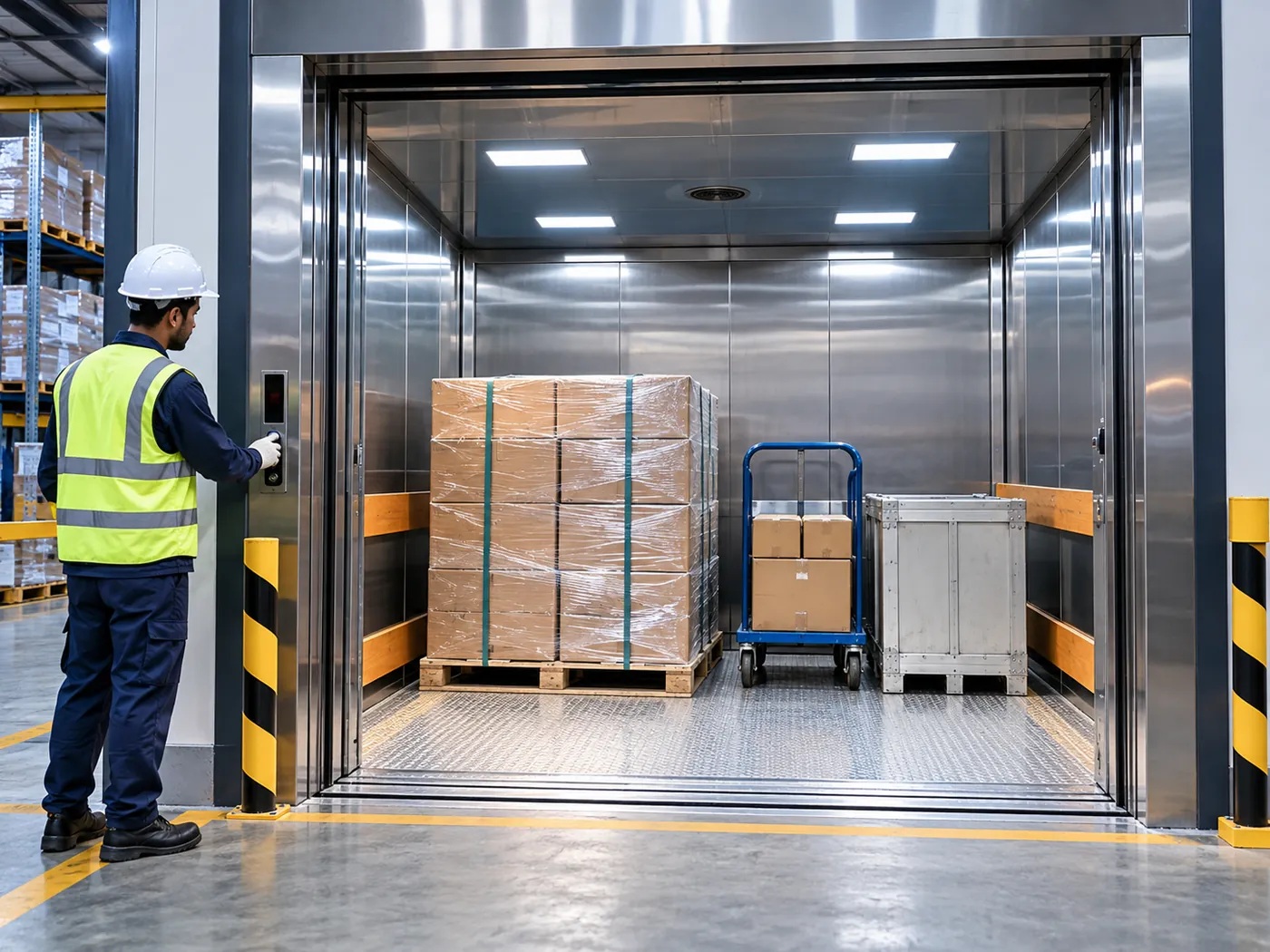
Count everything that goes into the lift
Say a crate weighs less than the lift's rated load. That does not settle the choice. Add the pallet, trolley or cage. Then check the full footprint and how the goods are placed on the floor.
Wheel loads can press on small areas of the cabin floor. If a powered pallet truck or forklift will enter, the supplier must check that loading case. Do not assume a standard goods car will take it.
- Gross weight of the load and its carrier
- Full length, width and height when loaded
- Wheel or point loads on the floor
- Room to place and remove goods safely
Match the lift to the loading route
Look at how the goods reach the lift, move inside it and leave at the next floor. The small details often decide whether loading will be smooth.
What should you check in a cargo lift specification?
Ask for one project drawing and specification that covers the car, doors, shaft, loading method and electrical needs. A list of feature names is not enough.
| Item | What to confirm | Why it matters |
|---|---|---|
| Rated load | Gross goods weight, pallet or trolley weight and load distribution. | Helps choose equipment suited to the actual loading case. |
| Car and door size | Clear inside dimensions and the usable door opening. | Long or wide loads must pass the entrance and fit inside. |
| Car floor | Floor strength, wheel loads, load placement and sill design. | Heavy wheels can stress a small part of the floor. |
| Stops and traffic | Floor levels, travel, trip frequency and peak shift use. | Daily duty can change the model and operating plan. |
| Shaft and building | Pit, overhead, support points, door openings and equipment access. | Civil work must match the selected system. |
| Water, dust and heat | Pit water risk, drainage, humidity and conditions near electrical equipment. | The proposed protection must suit the real site. |
| Drive and power | Selected drive, supply, protection and backup or recovery needs. | Power and machinery space vary by model. |
| Permitted users | Whether the lift is goods-only or approved to carry an attendant. | Staff must follow the intended use and safety instructions. |
| Building review | Structural engineer's review and relevant project approval requirements. | Do not start site changes from a catalogue dimension. |
For model-specific capacity comparisons, use the cargo lift capacity guide. This page covers the wider cargo-lift buying decision.
Make loading easy at both ends of the trip
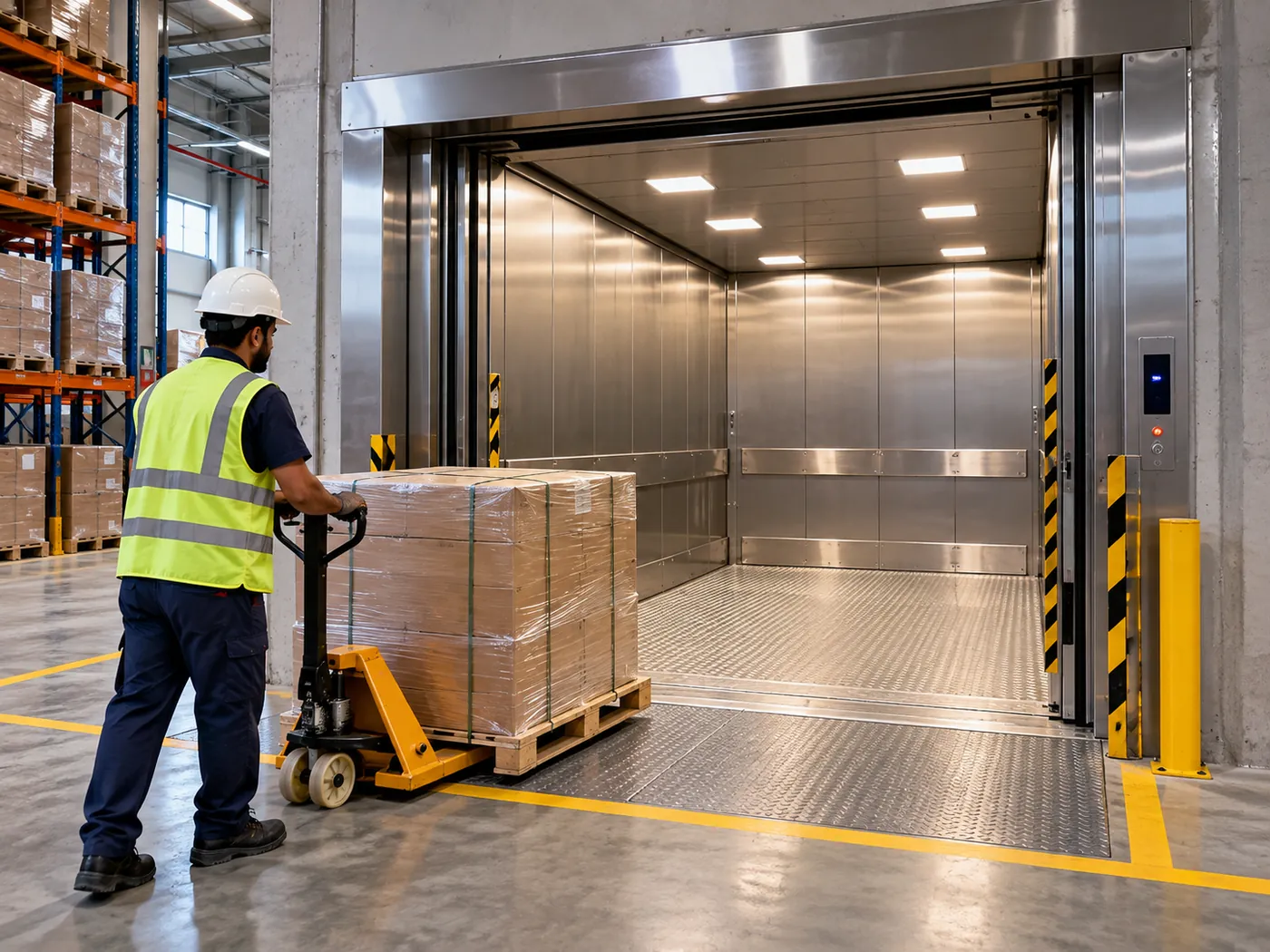
Picture a trolley coming out of the lift with a tall stack of cartons. Can it roll straight out? Does someone need to turn sharply near a stair or column?
Plan the approach space, clear door size, floor level and exit route together. If the goods are long or fragile, a through-entry layout may be worth discussing where the building allows it.
- Door clear width and height with the largest load
- Flat, usable loading space at every landing
- Safe floor transition for hand trolleys and pallet jacks
- Door arrangement that suits the route on each floor
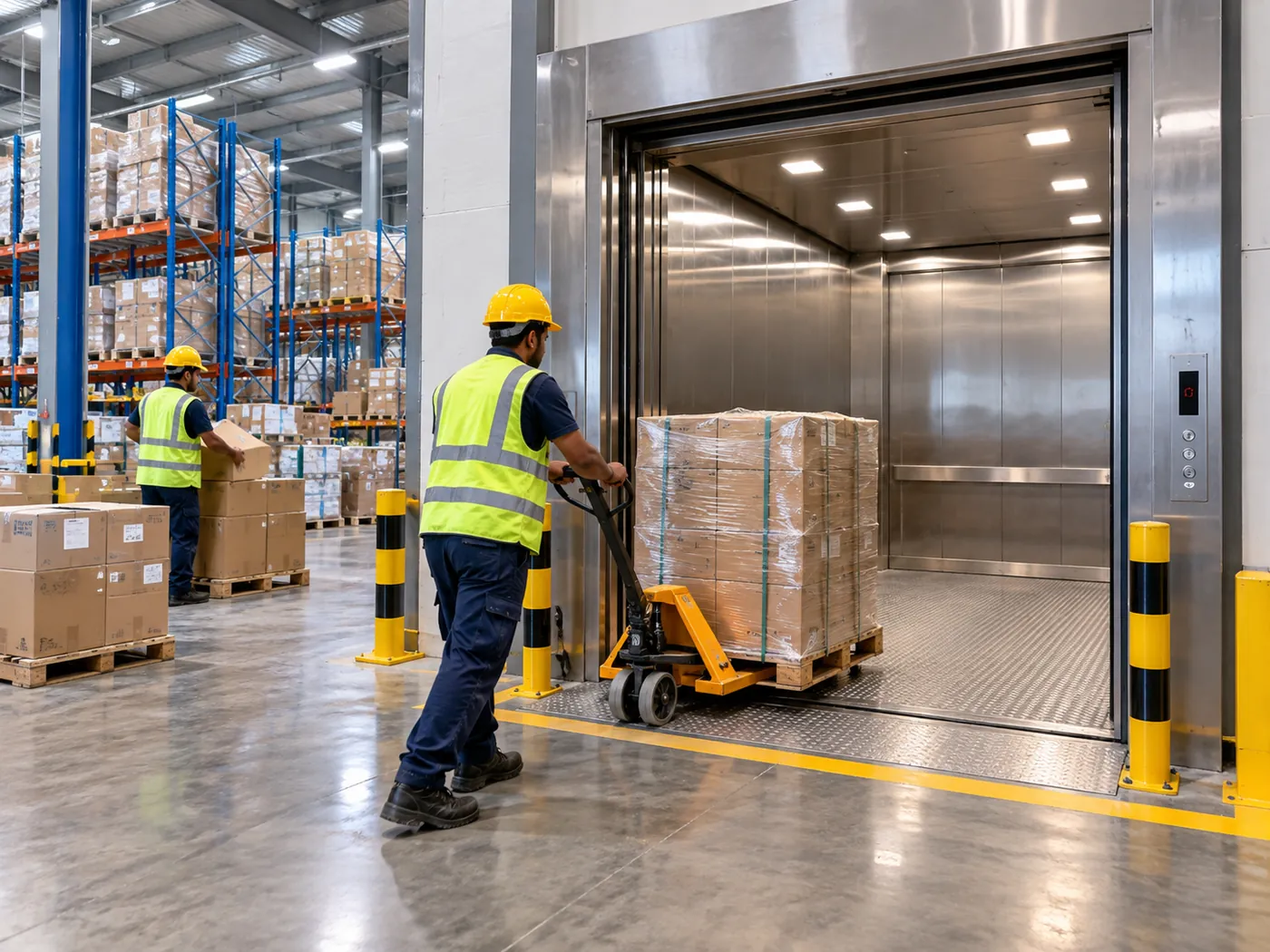
Follow the goods from receiving to storage
In a factory, raw material may move up to production and packed goods may come down. In a warehouse, cartons move from receiving to stock or dispatch. In a shop or commercial building, a back-of-house lift can keep stock movement away from the main customer route.
These jobs do not all need the same car or door. The number of trips, largest item and handling method tell you more than the building label does.
Need a page focused on your building type? See factory lift planning or warehouse cargo lifts.
Get the shaft and loading floors ready first
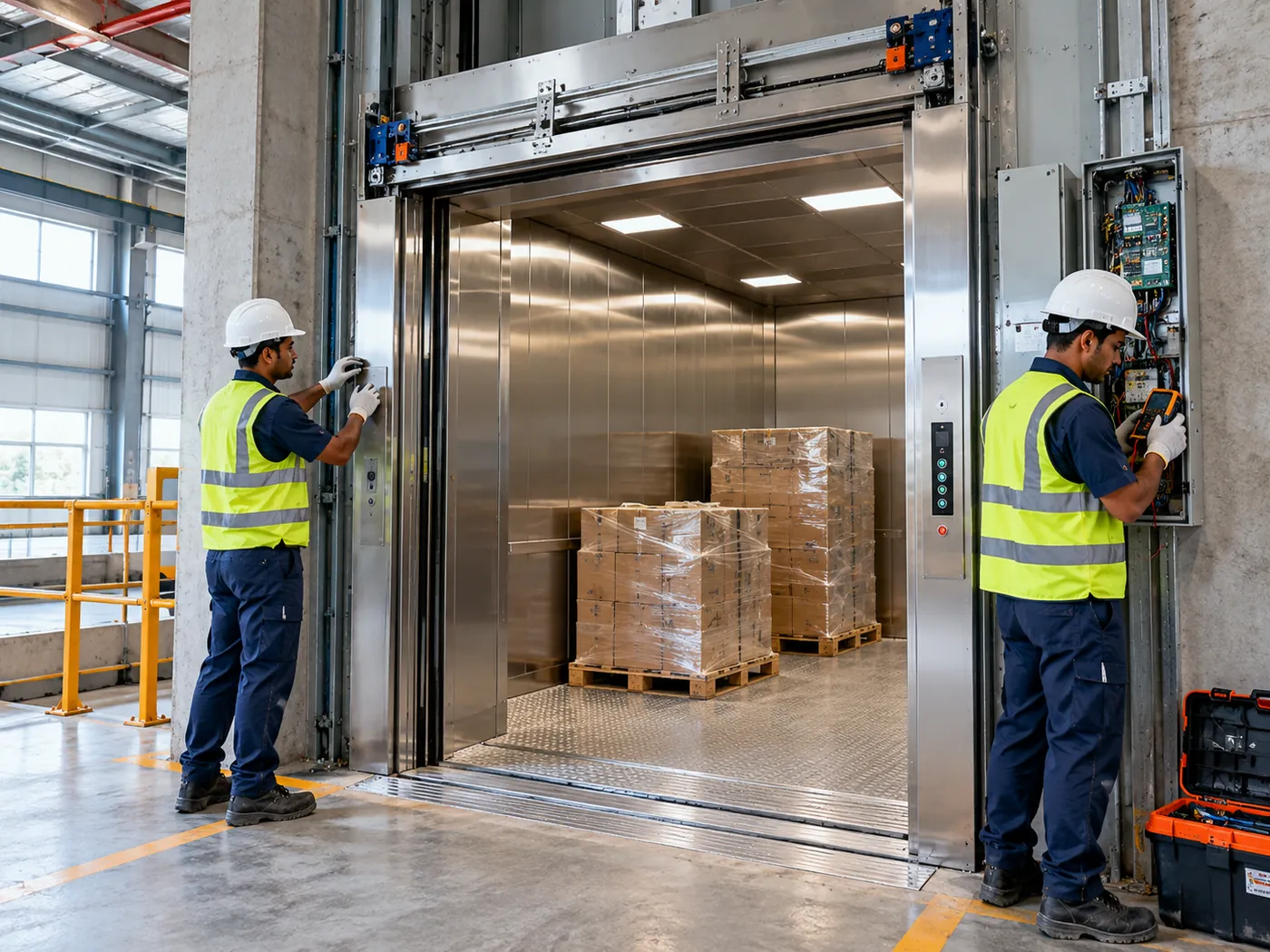
A cargo lift needs more than a space for the car. The building team must agree on floor levels, support steel, openings, power and the route used to bring equipment on site.
Where a factory is already working, the installation area should be separated from normal goods traffic. Agree on access and safe working periods before the job begins.
Keep the approved drawings, operating instructions and service documents after commissioning.
Five steps from load list to handover
Give the lift team the load details first. Then the building and equipment drawings can be checked against the same plan.
List the goods
Record the largest load, gross weight and how it is handled.
Survey the route
Measure shaft, doors, landings, structure and power.
Approve the design
Confirm load, car, door, drive and installation drawings.
Install and test
Prepare the site, fit equipment and complete required checks.
Train and maintain
Explain permitted use, loading rules and the service plan.
What affects cargo lift price in Bangladesh?
No fixed price can cover every load and building. A small goods car with two stops is a different project from a lift carrying loaded industrial trolleys over several floors.
Ask for an itemised offer so you can see the equipment, civil work, power, installation and service terms.
Cargo lift FAQs
How do I choose cargo lift capacity?
Start with the heaviest goods and add the pallet, trolley or cage that travels with them. Then check how the weight is spread on the car floor. A supplier should confirm the loading case against the proposed model.
Can a forklift drive into a cargo lift?
Only when the lift is designed and approved for that exact use. The forklift, its load, wheel contact points, cabin floor and door access must all be checked. Do not assume a standard cargo car can take a forklift.
Can workers ride with goods?
That depends on the approved type and intended use of the lift. Some cargo systems are goods-only. Check the manufacturer's instructions and project approval before allowing anyone to ride.
Is a hydraulic cargo lift the best choice?
Not always. Hydraulic systems may suit some layouts, but the right drive depends on the load, travel, daily use, space, power and servicing needs.
How wide should the lift door be?
Wide enough for the largest loaded item and its handling method, with suitable space at each landing. Use the clear door opening, not just the frame size, when checking a drawing.
What happens if the power fails?
Power-loss and recovery features vary by model. Ask how the lift is secured, what the recovery plan is and who may operate the system during a fault.
How much does a cargo lift cost in Bangladesh?
Price changes with rated load, cabin and door size, floors served, drive, shaft work, power, delivery and installation. An accurate quote needs your load details and building plan.
What should I send for a quotation?
Send the site location, stops, shaft size or drawing, maximum loaded weight, largest item dimensions, handling equipment and expected daily trips. Photos of the loading area also help.
Show us the goods and the loading route
Share the load weight, size, stops and available shaft with Dhaka Lift Solutions. We can discuss what needs to be checked before a cargo lift quotation is prepared.