

A building owner may ask for a capsule lift while the architect writes panoramic elevator on the drawing. Are they asking for two different machines? Not always. Both descriptions are used for glass lifts, and some suppliers put both names on the same model.
The useful difference is what each word describes. Capsule often points to the shape of the car. Panoramic points to the view passengers get while travelling. Knowing that difference makes it easier to compare designs for a hotel, office or shopping mall in Bangladesh.
Quick answer
Capsule lift vs panoramic lift: a capsule lift usually has a rounded, curved or specially shaped scenic cabin. A panoramic (observation) lift has glazing that lets passengers look out; it may be curved, rectangular or partly glass. A capsule can therefore also be a panoramic lift. Neither name tells you the load capacity, shaft size or final price.
Why do the names overlap?
In product catalogues, you may see capsule elevator, glass capsule lift, panoramic elevator and observation lift used for closely related products. The same curved glass car might appear under several of those headings.
For a buyer, the name is a starting point—not a technical specification. One supplier's capsule could be nearly round. Another may offer a faceted front with several flat glass panels. A panoramic model might have a single glazed viewing wall rather than glass all around.
Ask for a drawing showing the actual cabin shape, glass sides and landing entrance. That will settle the question faster than debating the label on a brochure.
Capsule and panoramic lifts compared
The table shows common design tendencies, not fixed rules that apply to every manufacturer.
| Decision point | Capsule lift | Panoramic / observation lift |
|---|---|---|
| Main idea | Distinctive cabin shape and architectural look | Clear outward views during the trip |
| Common form | Rounded, curved or faceted car | Flat-sided, curved or partly glazed car |
| View direction | Depends on glass position and supports | Designed around chosen viewing sides |
| Typical setting | Feature atrium, hotel lobby, premium entrance | Mall, office, hotel or façade with an attractive view |
| Project complexity | Curved glass and decorative metal may need more custom work | Glass enclosure, frame and viewing layout need careful coordination |
| Price | Not automatically higher or lower | Depends on exact configuration and site work |

Which looks better in a building?
Choose a capsule style when the lift is part of the display
Picture a hotel entrance with open balconies around a central atrium. A rounded glass cabin can become a visible feature from the ground floor and the upper galleries. Curved metal trim, lighting and the car's profile help it look like one designed object.
That does not mean the cabin must be circular or see-through on every side. The final form depends on the selected lift, available space and the architecture around it.
Choose a panoramic view when the outlook matters most
Now picture a glass lift at the edge of a shopping mall. People inside may want to look across the shops or outside towards the city. A broad flat glass side could serve that purpose well without a rounded cabin. In this case, the sightline matters more than the outline of the car.
A rectangular panoramic car can also be easier to fit into some building layouts. But that is not a promise of a smaller shaft: only a model drawing can confirm the space required.
Five design details that matter more than the name
1. Which side should passengers see through?
Mark the intended views on an architectural plan. A wall of a neighbouring building is not a good reason to pay for extra glass. A lift facing an open atrium or landscaped court may benefit from a much larger viewing area.
2. What will support the lift?
Some scenic lifts sit within a planned well. Others use a visible steel-and-glass support structure. The builder must coordinate structural loads, guide rails, enclosure panels, access and finishes with the lift supplier. The appearance cannot be separated from the engineering.
3. Where will the doors open?
A striking curved front is of little use if the landing entrance ends up awkward for passengers. Check the door clear opening, floor approach, circulation route and access for people with reduced mobility. Glass walls do not remove normal passenger-lift safety obligations.
4. How will the glass be cleaned?
Glass that looks beautiful on a drawing can be difficult to reach after installation. Ask where cleaners and service staff can work safely. Check how curved panels, fixings and glazing close to the building façade will be inspected or replaced.
5. Is it indoors or outside?
For a lift exposed to Bangladesh sun, rain and dusty conditions, the specification needs more than attractive glazing. Discuss water management, heat gain, corrosion protection, sealing and suitable access for maintenance. Do not assume an indoor atrium model is ready for an exterior façade.
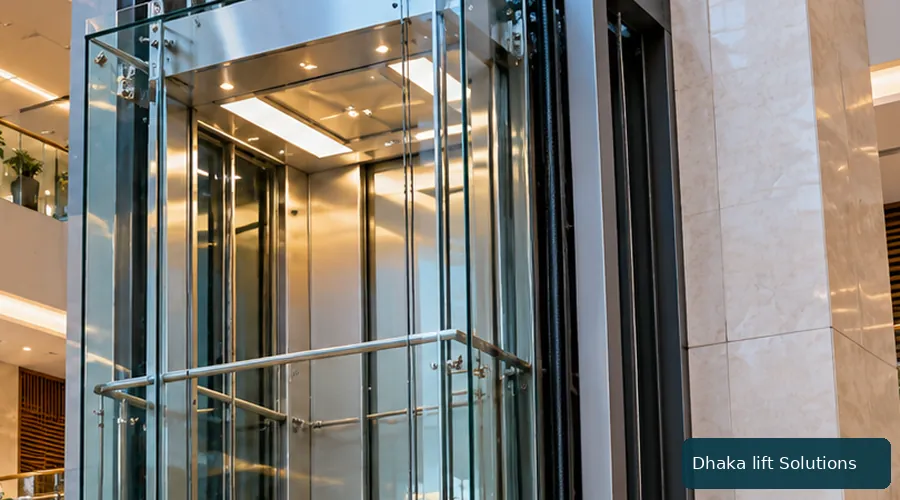
Is a capsule lift more expensive than a panoramic lift?
There is no reliable fixed price gap between the two names. A special curved cabin may need custom glazing and decorative fabrication. A flat-sided panoramic lift may still cost more if it needs a tall external glass structure, several viewing sides or difficult installation work.
For a sensible Bangladesh project comparison, ask both suppliers to quote against the same rated load, number of stops, speed, door arrangement and intended site position. Then check what each proposal includes.
- Glass and finish: shape, glass construction, frame design and decorative trim.
- Support and civil work: shaft, steel structure, foundation work and finishes.
- Installation location: internal atrium or weather-exposed exterior.
- Lift equipment: car capacity, drive, travel, controller, doors and safety provisions.
- After-sales needs: cleaning access, inspection, spare parts and maintenance scope.
- Commercial terms: imported components, delivery, installation, taxes and excluded building work.
A cheaper equipment quote may leave structural glazing or installation work outside the price. Compare the total project scope, not only the lift car.
Planning note: Neither “capsule” nor “panoramic” tells you whether the elevator is compliant with a particular project's safety, accessibility or building requirements. Confirm those details from approved technical documents and the responsible engineer.
Which type suits common Bangladesh building projects?
A hotel with a central lobby may favour a rounded capsule as a visual feature. A shopping mall atrium might choose either: one for its sculpted form, the other for open views across the floors. A corporate building may prefer a simpler flat-sided glass car that matches the façade.
For a building extension, the existing structure and floor access may decide much of the design. A compact visual concept is not necessarily a compact installation. The engineer still needs room for the car, guides, doors, pit, overhead and servicing.
If you have already chosen a curved design, the capsule lift design and planning guide looks more closely at glass placement, indoor and outdoor layouts and early drawing checks. This article stays with the terminology and selection comparison.
What to send before requesting a design proposal
You do not need a complete construction drawing set for a first discussion. Clear starting information is usually more useful than a reference photo on its own.
- Building type and intended lift location.
- Number of floors and stops to be served.
- Expected passengers and peak-use pattern.
- Existing shaft or proposed new structure.
- Available width, depth, pit and overhead details.
- Preferred glass viewing sides and cabin shape.
- Door position and landing access.
- Indoor or exposed outdoor conditions.
- Photos, sections or sketches of the site.
- Required maintenance and project handover scope.
Ask for a dimensioned cabin and structural arrangement with the proposal. It is much easier to change the visual concept before the builder fixes the shaft, cladding and landing details.
Frequently asked questions
Are capsule lifts and panoramic lifts the same?
They can describe the same product. Capsule usually refers to the car's distinctive shape, while panoramic refers to its view through glass panels. Suppliers may use both terms for a curved scenic lift.
Does every capsule lift provide a 360-degree view?
No. The cabin may have an opaque rear wall, visible support elements or glass on selected sides only. Check the approved cabin elevation and the actual view from the intended location.
Can a panoramic lift have a rectangular cabin?
Yes. A panoramic elevator may use flat glass walls and a rectangular car. The view and glazing arrangement define the scenic effect; a rounded profile is not required.
Can either lift be installed outside a building?
Some designs can be used externally, subject to the approved lift system and site conditions. Weather protection, structural support, sealing, heat and maintenance access need specific attention.
Which is cheaper: capsule or panoramic?
Neither is always cheaper. Cost depends on car shape, glass, support structure, capacity, travel, installation conditions and what the quotation includes. Compare the same project requirements before deciding.
Have a glass lift concept for your building?
Share the location, floor count and a sketch or photograph of the planned lift position. Dhaka Lift Solutions can discuss the information needed for a project-based specification and quotation.
Request a lift quotation