
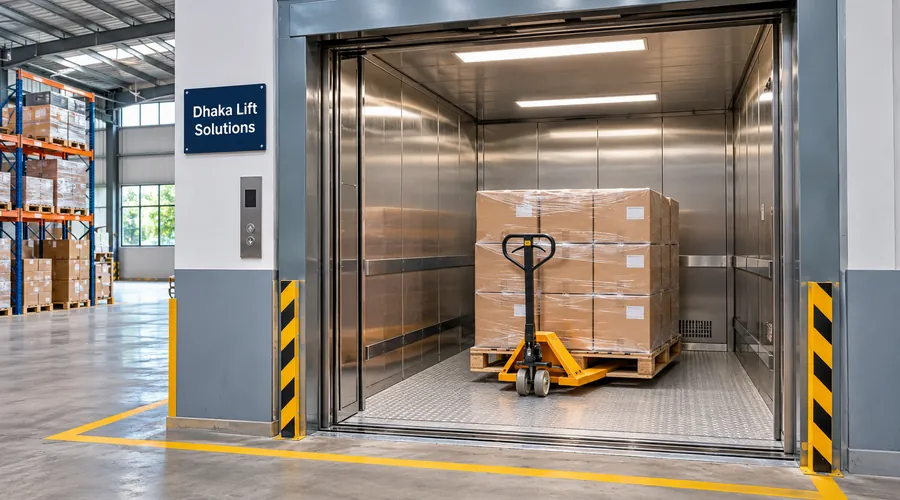
A supplier calls it a cargo lift. The building plan says goods lift. The factory manager asks for a freight elevator. Are they three different machines? Not always. The names often describe the same basic job: moving materials between floors. What matters is the lift's approved use and the load it is designed to carry.
Quick answer
What is a freight elevator? A freight elevator is a lift designed mainly to move goods, stock, equipment or other heavy loads between building levels. It usually has a hard-wearing car, a strong floor and doors suited to loading. Some freight elevators permit designated workers to accompany goods; goods-only lifts do not. Always check the actual equipment classification and instructions.
Are cargo lifts, goods lifts and freight elevators different?
In Bangladesh, buyers and suppliers often use these three names for similar equipment. “Freight elevator” is common in technical and North American material. “Goods lift” appears often in British-style specifications. “Cargo lift” is a familiar term for industrial material movement.
The words do not tell you the rated load, cabin size, drive type or whether someone may ride inside. Those details must come from the proposed equipment specification.
| Term | Common meaning | What to confirm |
|---|---|---|
| Freight elevator | A lift mainly intended for freight or industrial goods. | Approved riders, load rating and loading method. |
| Goods lift | A general name for moving goods between floors; may be goods-only or allow attendants, depending on the design. | Whether it is goods-only or approved for people to accompany loads. |
| Cargo lift | A market term often used for lifts carrying cartons, pallets, equipment or factory materials. | Car floor strength, usable door opening and daily operating duty. |
The practical rule: compare drawings and written specifications, not product names. For buying options, see the separate cargo lift solutions, goods elevator options and freight elevator page.
Where is a freight elevator used?
Think about the route goods take through a building. In a Gazipur factory, that might be raw materials moving upstairs to a production floor. At a warehouse, it could be pallets travelling from receiving to storage. In a retail building, staff may move stock in roll cages.
- Factories: machine parts, fabric rolls, packaged products and other production materials.
- Warehouses: cartons, pallets and storage trolleys moved between levels.
- Commercial buildings: stockroom deliveries and large service items.
- Industrial facilities: bulky equipment where the floor, door and loading approach need careful design.
For small food trays or documents, a dumbwaiter may serve a different need. It should not be treated as a scaled-down passenger or industrial freight elevator.
Can people ride in a freight elevator?
Only when that exact lift is approved for it. A goods-only lift is not a passenger lift. Some freight elevators are designed to carry an operator or workers needed for loading, but that does not mean the public can use them.
Ask the supplier to state, in writing, who may travel inside. Check the rated-load plate, operating instructions and applicable safety requirements. Never assume a lift can carry people because its car is large enough to stand in.
Safety point for Bangladesh projects: lift design, installation, inspection and operation must be reviewed against the relevant building and elevator requirements, including applicable provisions of BNBC 2020. A site-specific technical review is needed; the name in a sales quotation is not proof of compliance.
How do you choose the right goods-moving lift?
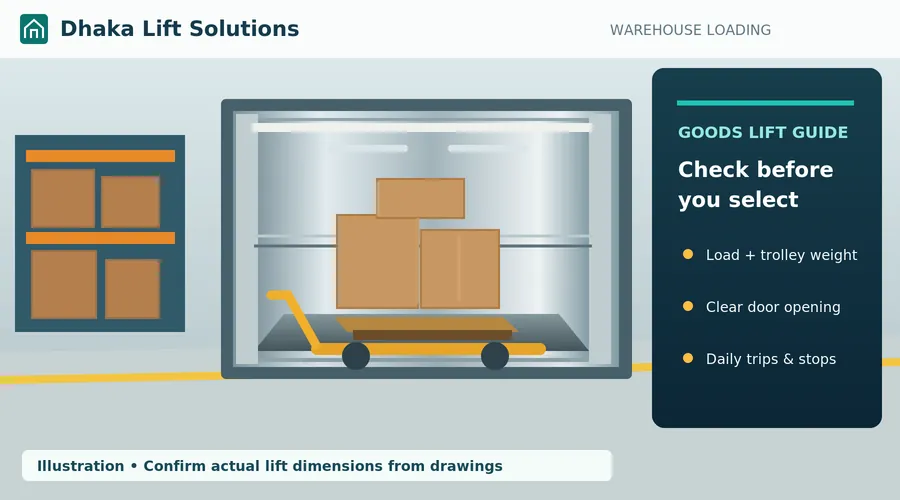
Start with one real load, not a catalogue picture. Measure the heaviest and largest item the building will move. Then note how staff handle that item at every floor.
- Record the full weight. Include the goods, pallet, trolley and any handling device entering the car.
- Measure the full load. Note width, depth and height. A load may fit the cabin but fail to pass through its clear door opening.
- Explain loading. Hand trolley, pallet jack and powered industrial truck loads can place very different forces on the floor and sill.
- Count floors and trips. A few daily stock deliveries are not the same duty as frequent factory transfers all day.
- Check the building. Confirm shaft space, pit, headroom, landing access, structure and electrical supply with the project team.
- Confirm permitted users. State clearly whether goods travel alone or a trained attendant needs to ride.
Need the actual car, door and shaft measurements? The freight elevator size guide covers that planning step. For warehouse traffic and loading patterns, use the warehouse cargo lift selection guide.

Freight elevator vs passenger or service lift
A passenger lift is designed for people. A service lift in a hotel or hospital may carry staff, carts and other supplies; its permitted use depends on its design. A freight elevator is selected mainly for goods movement, especially where loads are heavy, bulky or frequent.
Do not use “service lift” as proof that a lift is safe for either industrial loading or passenger travel. The equipment category and rated conditions must be checked first.
Three mistakes to avoid before ordering
- Choosing on kilograms alone. Two loads of the same weight may need different car sizes, door openings and floor protection.
- Leaving out the pallet truck. Its weight and wheel loads can change the required floor and threshold design.
- Assuming everyone may ride. This needs an explicit answer in the specification, not a verbal promise.
Price also depends on the number of stops, loading arrangement, door type, building work, control system, installation and after-sales scope. A useful quotation should describe these items rather than give only a single total.
Frequently asked questions
Is a cargo lift the same as a freight elevator?
Often, yes, in everyday sales language. Both terms may refer to a lift designed for goods. The actual classification, rated load, size and permitted users are what make two machines different.
Can a goods lift carry workers?
Some designs allow trained operators or loading staff, while goods-only designs do not allow anyone to ride. Check the specific model's approval and operating instructions before use.
Is a bigger freight elevator always better?
No. A larger car may add cost and building-space needs without solving the real loading problem. Select capacity, floor rating, car size and door opening around the loads and trips the building needs.
What should I send for a freight lift quotation?
Share the site location, number of stops, estimated shaft size, largest item dimensions, total load weight, trolley or pallet-jack details, daily trip needs and whether an attendant must travel with goods.
Have a lift to plan for your building?
Send the load size, weight, floors and loading method. Dhaka Lift Solutions can discuss which type of lift and project details should be checked before you request a final specification.
Request a Lift Quotation